
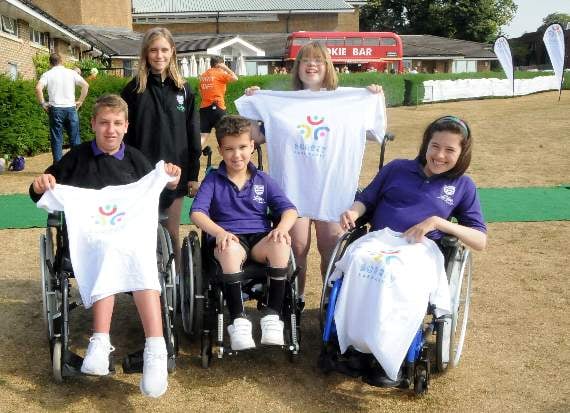
The event is open to both primary and secondary school children from mainstream and SEND schools. Pupils from Stepping Stones, The Abbey School, The Ridgeway, and Rodborough were amongst the schools that attended.
As part of the Surrey School Games Programme, the Para Games provides children with disabilities the opportunity to build relationships with local clubs and potentially be talent spotted. Sports available included boccia, football, rowing, rugby, swimming, tennis, sitting volleyball and cycling.
The Surrey Para Games, previously the Waverley Games, was launched in 2013 by South West Surrey MP Jeremy Hunt to create a “lasting sporting legacy” after the 2012 London Olympics.


-call-handlers.jpeg?width=209&height=140&crop=209:145,smart&quality=75)

Speaking to the Herald at this year’s event Mr Hunt said “the real benchmark to success” is inspiring children to continue participating in sport.
He added:“The objective has always been very clear, which is that it isn’t just about the number of children we get to the event, it’s also the number of children that end up starting to play sport on a weekly basis.”
He continued: “The really sad truth is that it is much harder for disabled children, to play sport regularly, than it is for anyone else. Often because of practical reasons like transport. But they benefit from sport just as much as we all do. There’s a real sense of accomplishment, of doing things you didn’t know were possible.”
Farnham’s double-Paralympic gold medallist and Para Games ambassador Rachel Morris MBE said: “For me it’s about the mental and physical well-being of these children. Kids that really need to be able to emotionally regulate, learn how to use sport in a way that might mean they don’t need other interventions.”
Melissa Grimsby, executive headteacher at Stepping Stones in Hindhead, explained why the games are so important: “The profile around disability sports, apart from the Paralympics and events like that, is still quite low especially for the type of students that are attracted to the Para Games here today.
“They are students who are trapped between two worlds, and so the importance is for clubs as well as schools and parents to understand is that there doesn’t need to be a separate club for disability but more of a parallel club that helps with social mobility as well as developing sports.”
David Forbes-Nixon, chairman of DFN Charitable Foundation, an official sponsor of the games, explained that there are “still some fairly big stigmas” surrounding what SEND children are capable of.
He added: “I’ve got a son with disabilities, he’s got a walking difficulty, yet he amazes me at what he can do.
“This sort of event allows them to experiment in a safe environment and raise expectations and their confidence.”
Comments
This article has no comments yet. Be the first to leave a comment.