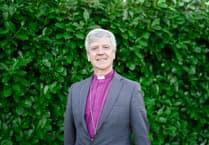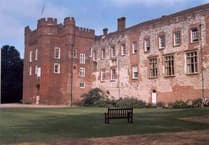
SELBORNE village is using its position as a national tourist attraction to champion the cause of rural communities like itself, who are fighting to improve road safety. Local residents are among the first to urge Government safety advisers to include villages in a proposal to introduce a blanket 20mph in built-up areas – a scheme that experts believe would halve the deaths on Britain's roads. The parliamentary advisory council for transport safety (Pacts) is currently pushing for the restriction to be implemented in towns and cities. But, with 60 per cent of the UK's annual 3,200 road fatalities in rural areas, Selborne believes the villages should be top of the list for a 20mph scheme. Led by president of the Selborne Association, Dr Edward (Ted) Yates, the village is preparing to throw its weight behind a campaign for an all- inclusive scheme. On Monday last week, Dr Yates set the cat among the pigeons with an inspirational letter to The Times bearing 35 hard hitting and prestigious signatures, among them Sir David Bellamy, the Rt Hon The Lord Archer of Sandwell QC, Dr Richard Gornall, High President of the British Ecological Society, Prof Sir John Lawton President of the British Ecological Society, Dr Caroline Lucas MEP for South of England, Lord Selborne, the Rt Rev Trevor Willmott, Bishop of Basingstoke, and Dr Owen Plunkett of the Ramblers Association. Renowned worldwide as the picturesque village that inspired Gilbert White, the father of ecology who immortalises it in his classic work The Natural History and Antiquities of Selborne – and located within an Area of Outstanding Natural Beauty, Selborne now acts as a mecca for tourists from every corner of the globe. Sporting a headline "ripped apart by traffic", Dr Yates began his letter to The Times by quoting Gilbert White: "At the foot of this hill, one stage or step from the uplands, lies the village, which consists of one single straggling street, three quarters of a mile in length, in a sheltered vale, and running parallel to the Hanger." The long-time Selborne resident points out that the "straggling street" has now become the B3004 which, although no wider than in Gilbert White's time, now carries 10,000 vehicles a day, including juggernauts. "There is a speed limit of 30mph and a ban on lorries over 7.5 tons, but both are disregarded," writes Dr Yates, adding that speeds are often well in excess of 30mph. Furthermore, because the pavements are narrow or non-existent, wing mirrors are a constant hazard and in the rush hour it is difficult to cross the road. He continues: "The cottages, shops and inns on either side of the road, many of which are 15th and 16th century and without foundations, are shaken by the traffic. "There is a complete loss of tranquility and the atmosphere that White describes as "soft" is now heavily polluted with petrol fumes and vehicular noise. "Priority is given to vehicles. Our children cannot walk to school unescorted. They cannot explore the lanes alone." Believing that the village is under threat, the eminent line-up of people who put their names to Dr Yates' letter are calling on the authorities to change current policy to protect Selborne and villages like it. This, they believe, can be done by ensuring that long-distance commuter traffic stays on the A- roads. With tranquility restored and environmentally- friendly traffic calming measures in place, this would allow the village streets to become once more "a shared space". In Selborne, Hampshire County Council is blamed for installing the Greatham link to the A3 which encourages traffic to use the B3004 as a short cut to the A31. As a result, the morning and evening rush hours bring a constant stream of vehicles, many of them exceeding the speed limit. At a meeting of Selborne Parish Council's traffic management committee on Monday Dr Yates urged councillors to push for speed cameras to assist with speed reduction through the village. He pointed out that since the law was changed in April this year it was no longer necessary to have four recorded deaths in an area to warrant the installation of cameras. And he asked councillors to draw up a petition, to send to Downing Street, demanding that any 20mph limit in built-up areas be applied to rural communities. The requests are expected to be considered by the next meeting of Selborne Parish Council.