
HAMPSHIRE County Council’s leader has called for a halt to the damaging debate over devolution – after the concept of a Solent Mayor was kicked into touch at a high-powered Westminister meeting at the end of last month.
After Whitehill indicated that the lack of agreement among Hampshire’s local authorities was the prime reason for ditching devolution, councillor Roy Perry, Tory leader at Winchester County Hall, made the plea for unity.
He said: “It’s high time we (Hampshire’s local authorities) came back together in a constructive way, put our recent differences behind us, and focused on the needs of all our residents in difficult times.
“The Solent bid would not help the local economy, it would do it harm by isolating the area from the economic resources of the wider county as well as forcing the dismantling of vital county services – now and in the future.

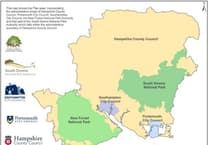


“Nor is there any case for the creation of new unitary councils that cut across the county of Hampshire – again because they make no sense financially or for services.
“There is actually an overwhelming financial and service case for creating a county-wide unitary, as is being planned in Oxfordshire and Buckinghamshire.
“All local and national evidence shows this would do more than any other model to save money, protect vital services, and cut council tax.
“But while the hard evidence for county unitaries is clear, Hampshire County Council prefers, if possible, to work with the districts in the interests of partnership.
“We want a concerted effort to work together in the county to make the two-tier system work, and to re-vamp our vital relations with the three unitaries.”
East Hampshire District Council leader Ferris Cowper said the devolution initiative had been challenged on many fronts, notably whether there was a maximum size of a combined authority, beyond which it was too big to be genuinely “local” government, plus the highly controversial concept of the new mayor.
In the summer of 2015, he made it clear that, in his view, a combined authority for the whole of Hampshire was “simply too big”.
“The challenge has been to try to find the best solution for East Hampshire,” said Mr Cowper.
“Our business strategy published at the start of 2014 promised financial independence from government grants by 2019/20 and aspired to be tax free by 2021/22. With those strategies and aspirations still on track at the start of 2017, our need for a financial bail-out is much less than any council in Hampshire, possibly England and Wales.”
He added: “This debate has not delivered a devolution proposal that has been acceptable to the Government. My assessment of the politics is that while devolution remains a government policy, difficult devolution does not.
“I do not expect to see any devolution deal for any part of Hampshire in this year’s Chancellor’s statement with the spring budget.
“If I am right then, in my view, continued engagement in this debate will be unproductive from this council’s point of view and I would withdraw EHDC from those deliberations at that time.”
He concluded: “What would this mean for East Hampshire?
“No new elected mayor.
“No additional layer of government. I think most people would support that.
“It would also mean no 100 per cent retention of business rates or large infrastructure grants.
“But we are still on track to be financially independent in 2019/20 and we will still continue to cut tax and improve services as we did in 2016/17.
“That could make EHDC the most financially successful council in England and Wales, just as we promised we would at the start of 2014 in our radical business strategy.”
When the idea that groups of councils would join together as combined authorities, led by a new democratically-elected mayor, with a view to taking on some central government services was floated two years ago, Mr Perry said he was determined to keep an open mind and asked the public for their views on the Government-led devolution process.
It would have seen the creation of one or even two super councils covering the existing 11 local authorities in return for full retention of business rates plus investments in much needed infrastructure including an upgrade for the M27.
Southampton, along with Portsmouth and Isle of Wight councils, applied to the Government last October to create what they felt would be a devolved Solent authority to boost economic growth which would, they understood, benefit from a £900million allocation over 30 years by the Government.
But at the Westminster meeting on January 25, involving Hampshire MPs and council leaders, Portsmouth City Council leader Donna Jones announced the money appeared to have been lost because of opposition by Hampshire County Council, and the lack of consensus.
Isle of Wight Council leader Dave Stewart confirmed his recently elected Conservative administration would not support the existing bid.
Mr Perry said at the time: “I’m not surprised the deal is dead. It would not have helped the local economy and would have led to the dismantling of vital county-wide services, such as transport, health and social care.”
He resisted devolution bids for the Solent, and the Heart of Hampshire, which covers Basingstoke and Deane, Hart, the New Forest, Rushmoor, Test Valley and Winchester councils, because they made “no economic sense in creating false divisions – geographically and between authorities”.
Comments
This article has no comments yet. Be the first to leave a comment.