
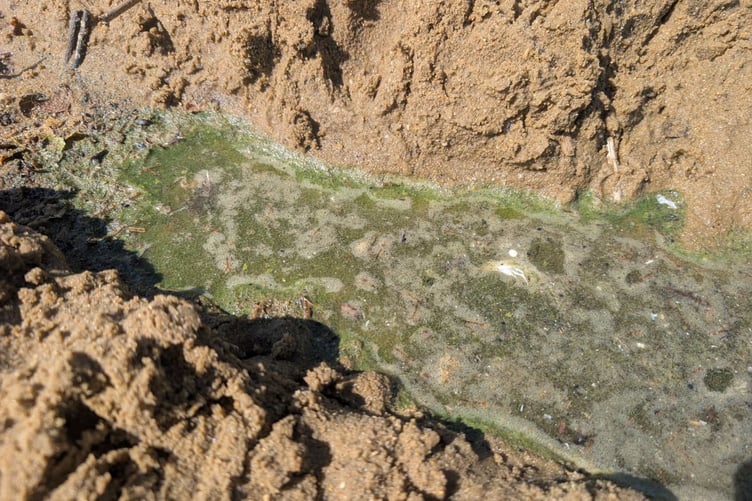
As temperatures rise, a cooling dip may sound attractive – but not in Frensham Great Pond.
Waverley Borough Council has erected warning signs telling visitors to keep out of the water after a ranger spotted suspected blue-green algae on Friday morning.
A spokesperson for Waverley said: "Our rangers have found what is suspected to be blue-green algae in the water at Frensham. The Environment Agency has been notified for further checks to be taken.
“Please do not enter the water or swim – this includes keeping pets out, as blue-green algae can be harmful to both people and animals. Your safety is our priority, and we are monitoring the situation closely."

Blue-green algae can cause illness or painful rashes in humans and animals. The algae can also kill wild animals, livestock, birds and domestic pets, with dogs being particularly vulnerable. In humans, contact can cause rashes, eye irritation and blistering, while swallowing contaminated water can lead to abdominal pain, diarrhoea and nausea.
The algae occur naturally in freshwater ecosystems when warm weather is followed by heavy rainfall, causing large amounts of nutrients to be washed into the water. Further warm, settled conditions allow the algae to proliferate – known as a bloom – and scum may form on the surface. It is these blooms that can produce toxins.
Blue-green algae photosynthesise during the day, converting sunlight, water and carbon dioxide into glucose while adding oxygen to the water. However, they consume oxygen at night, meaning levels can be very low early in the morning, which can suffocate fish and other aquatic animals.
There is no easy way to remove the algae once it becomes established and, when it naturally dies off, the bacteria responsible for its decay can further deplete oxygen levels in the water.
Not all blue-green algae blooms are toxic, but it is not possible to tell simply by looking at them, so people are advised to stay away from affected water.
Anyone who believes they have been affected by blue-green algae should seek medical advice or, in the case of pets, veterinary advice.
The Environment Agency will visit the site to confirm the presence of the algae and the council said it will keep the public informed through its website and social media channels.
Comments
This article has no comments yet. Be the first to leave a comment.