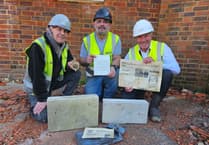
THE remains of a World War II German airman shot down during an air raid have been discovered in Fernhurst. The discovery came during the excavation of the crash site to remove all trace of the airman's plane after years of illegal digs at the war grave close to Friday's Hill. Efforts are now being made to trace the airman's family while aviation experts pore over the remains of his bomber. The Dornier 217 was shot down over Fernhurst by the RAF on March 8, 1943, while on its way to a bombing raid. It is believed that the plane was one of 32 making its way to Southampton Docks, where a number of the Royal Navy's ships were docked, for a mini "Pearl Harbour-style raid". However, the failure to take wind conditions into account spelled trouble for the Dornier and it was shot down. Two members of the crew were able to parachute out of the plane while a third died in the crash and was subsequently buried in Chichester. However, the fate of Luftwaffe Flight Engineer Franz Huske, who was 21, was not known because his body was never found - until now. This month's two-day dig was led by aviation excavator Keith Arnold, who told The Herald that the Ministry of Defence called for the excavation to bring an end to illegal digs at the wooded site. "Over the years there have been a lot of trespassers up there doing illegal digs and trying to get souvenirs at what is effectively a war grave," he said. "The MoD felt that now was the time to do something about it." The police and an Army bomb disposal team were on standby during the dig in case any live ammunition or bombs were discovered. However the huge payload of the bomber was removed during an earlier small excavation in 1989 and nothing major was found. The excavation team had to dig down more than 20 feet into clay mud to get to the bomber when they made the discovery of Herr Huske's remains. Mr Arnold said that although the discovery of the airman was not a huge surprise, there was no certainty that he would be found. However as soon his remains were found, the excavation had to change. "As soon as we found the remains we stopped digging," he explained. "We could not just carry on." Prayers were said at the site and the coroner took charge and removed the remains, which are now at St Richard's Hospital in Chichester. Once this had been carried out, the excavation team moved back to the site and found a treasure trove of items and around two tonnes of plane wreckage. As well as a massive number of fragments, the team also dug out the bomb racks, the front of the plane and the undercarriage which was transported to Tangmere Military Aviation Museum in Chichester on Tuesday. Excavators also found a perfume bottle bought in Marseilles which Mr Arnold said was likely to have been purchased by a member of the crew for a loved one. They also found two miniature bottles of alcohol - one believed to be brandy and one Schnapps. All the items which were found have been taken back to the military museum to be cleaned up over the next few months. Many questions about the bombing raid and the plane remain unanswered and Mr Arnold said that more research was needed. He told The Herald that he was unsure how many of the bombers had made it to Southampton. He also said that on the same night as the plane crashed in Fernhurst, there were three explosions in Haslemere and the church tower in Fernhurst was also hit. "It is possible that they came from this bomber although it is all guesswork," he said. Mr Arnold said that eventually the wreckage of the bomber and many of the artefacts would be on display at the museum. Meanwhile, a spokeswoman for Sussex police told The Herald that efforts were ongoing to locate Herr Huske's next of kin. She explained that an inquest would need to take place, after which the remains will either be repatriated to his family for burial or he will be buried in the local area.