

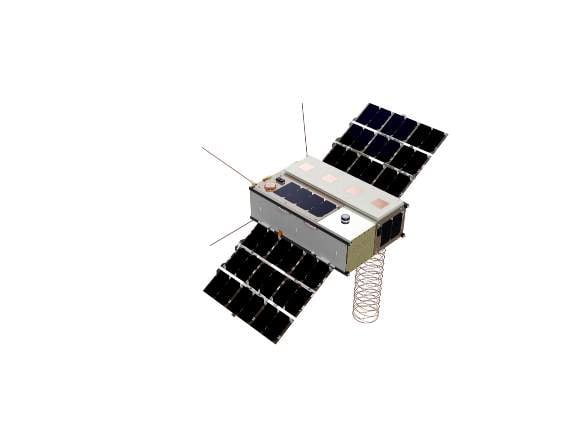
A SATELLITE made in Bordon came down in flames last weekend, after an ill-fated rocket launch saw the sad demise of nearly two years’ hard work.
Pioneering mission Faraday-1 – the first in a series of satellites set to be launched by Bordon tech firm In-Space Missions – was launched in New Zealand last Friday (July 3), along with six other satellites from other companies.
The scheme was set to provide a turnkey service for commercial customers and research organisations “wanting to access space at a competitive and affordable cost”.
However, just moments after launch, the rocket housing the satellite carrying seven payloads exploded four minutes into take-off.




The satellite was carrying payloads from organisations, including Airbus Defence and Space, Kleos Space and the Space Environment Research Centre in Canberra.
The payloads were to demonstrate a range of applications including 360-degree optical video imaging.
In addition, the Faraday-1 was to prototype the vision system and content processing for SpaceTime Enterprises, an In-Space joint venture providing real-time video from space.
Speaking following the doomed launch, In-Space Missions CEO, Doug Liddle, said: “The In-Space team sat poised yesterday evening watching the launch of Faraday-1, which was a culmination of two years of hard work.
“When we heard the launch vehicle failed four minutes into the flight, we were all absolutely gutted.
“Many of our team have been involved in previous space missions, so we’re fully aware of the fragile nature of launches. However, this knowledge and experience doesn’t make this failed mission any easier to accept. We are also extremely disappointed for the seven customers on board our satellite but will work hard with them all to ensure their planned missions successfully reach orbit as soon as possible.”
Despite the failed launch, Doug said work on Faraday-1b – previously set for mid 2021 – would now be pulled forward, promising to “be on the launchpad again in the very near future”.
Owners of the rocket involved, New Zealand-based company Rocket Lab, had previously launched 12 successful missions.
After the launch, Rocket Lab founder and CEO Peter Beck tweeted: “We are deeply sorry to our customers for the loss of their payloads. We know many people poured their hearts and souls into those spacecraft.
“Today’s anomaly is a reminder that space launch can be unforgiving, but we will identify the issue, rectify it, and be safely back on the pad as soon as possible.”
Comments
This article has no comments yet. Be the first to leave a comment.