
THE recent celebrations of the history of the Maltings is a good reason to pause and reflect on the turbulent period when the Maltings was about to be sold on for development.
The owners, Courage the brewers, were persuaded to offer the freehold for the sum of £30,000 which was considerably below the market value.
A major problem was that the money had to be raised over a six-week period starting in January 1969. A public appeal raised £18,000 and the remaining £12,000 was raised from the sale of the Maltings cottages to The Farnham (Building Preservation) Trust.
Fundraising continued well into the 1970s, with public donations augmented by grants of £30,000 from the Ministry of the Environment, £15,000 from the Arts Council, and £2,000 from The Pilgrim Trust.
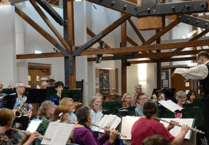
The project was made possible not only by the generosity of subscribers but also by the practical help of large bands of volunteer workers who undertook considerable clearance work in the old buildings.
The Farnham Society was involved throughout these torturous events and virtually all the major players were members.
Initially, some of the councillors of the Farnham Urban District Council were unsupportive and viewed the expenditure as a waste of money.
Fortunately, the activity of councillors such as Sir John Verney eventually carried the day but not before Sir John in exasperation at the dilly dallying while the deadline grew closer described the council as “a hot bed of cold feet”.
Frank Cordier was an extremely active member of the public and ran a Post Office in Hale and was fondly known in Farnham circles as one of the ‘Hale Mafia’.
His energy and determination to make the project a success was an inspiration to all those involved.
Raymond Krish, a leading solicitor in Farnham, undertook the task of preparing all the complex legal documents to secure the acquisition of the Maltings and then setting up the trust documents to ensure the future was in safe hands.
The amount of work and time this took up must have been enormous. Despite all this diversion his practice continued to flourish. The solicitors, Bells in East Street, can claim to be directly related to Raymond’s practice.
Brigadier Bill Anderson, was a larger-than-life character who had the doubtful privilege to have been incarcerated in Colditz Castle in recognition of his determination to reject German hospitality.
Probably behind his back, he was fondly referred to as Colditz Bill. He was a highly competent engineer having spent his army career in The Royal Engineers and undoubtedly his knowledge on structural matters stood the volunteers in good stead when RSJs and supporting beams were being put in place.
On the basis that army engineers make things to last, there is every hope the building will stay upright for a few more centuries.
It is perhaps ironic that having been a prisoner at Colditz he then found himself in charge of six young offenders who were on day release to help in the heavy reconstruction work.
Bill could be seen organising their day which involved moving tonnes of soil out of the buildings on to what is now the car park.
He not only directed the work but with sleeves rolled up he could be seen pushing wheelbarrows and tamping down the earth surface in the newly emerging car park.
Always interested in local matters and to prove it viable and practical, he built a model of a proposed underpass at Hickley’s Corner. Sadly, ignored by the authorities at the time.
What did The Farnham Society do as an organisation? Well, what it always does in extreme situations. It has the ability to rapidly organise a public response and ensure the driving force and administrative structure is in place to allow the project to gain its own momentum.
It was The Farnham Society which called the public meetings, chaired by Tony Crow and held at the Boys’ Grammar School in February 1969 having already promised the funds necessary to kick start the public appeal.
Many members participated in all the hard work to raise public interest and necessary finance.
Support continued to be given until the new managing committee could get under way. Exactly the same happened a few years ago when The Farnham Society held the first public meeting to launch the Bishop Meadows Trust and there are other examples.
At the time of the Maltings crisis some members were also members of The Farnham (Building Preservation) Trust and they readily changed hats to get the right result.
Without the involvement of the trust the required funds would not have been raised and their continuing involvement helped to ensure the project became a success.
This does demonstrate the necessity to have town organisations in existence with the expertise and supporting structures to quickly pick up a challenge.
Farnham is fortunate enough, even today to have The Farnham Society and The Farnham (Building Preservation) Trust which together can address most major challenges.
The benefits can be seen all around us.
By Alan Gavaghan
Chairman
The Farnham Society
Comments
This article has no comments yet. Be the first to leave a comment.