
RELATIONS between East Hampshire District Council (EHDC) and Hampshire County Council (HCC) continue to sour, this time over cut hours at recycling centres.
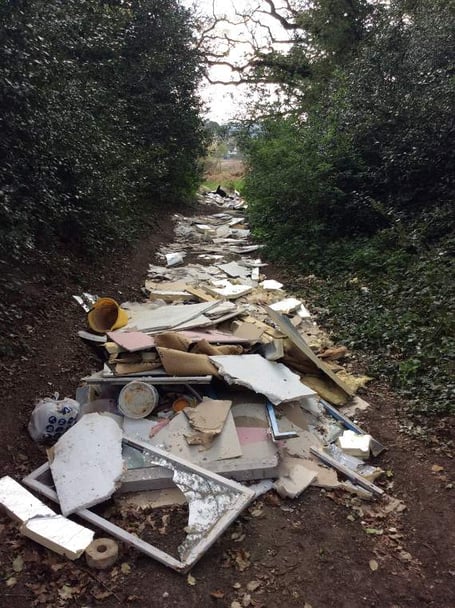
EHDC said it has been “forced” to take action as the fight against fly-tipping is “stepped up” after HCC “simply ignored” the consequences of its cost-saving measures.
But the criticisms are set in a larger picture, seen by some as a battle for survival with HCC holding consultations on devolved powers – which could see huge changes to local authorities.
It has also been suggested that jabs about fly-tipping are veiled attempts to “discredit” HCC, which maintains that changes to recycling centres are reasonable and necessary.




District council leader Cllr Ferris Cowper said: “The inevitable increase in the curse of fly-tipping was simply ignored by the leader of Hampshire County Council when he tried to defend his policy of cutting hours at the centres, closing them altogether on Thursdays and charging some people to use them.
“I know very well that for many of our residents fly-tipping is a nightmare which looks terrible, causes accidents from concealed sharp objects, destroys the appearance of their local community, encourages anti-social behaviour and even contributes to the spread of diseases.
“The local East Hampshire District Council is strongly opposed to these closures and we are deeply disappointed that the county council over in Winchester sees fit to press ahead despite being clearly warned of the consequences.”
Mr Cowper explained that he has met with his cabinet and senior officers to find a solution to HCC’s “regrettable closure programme”. Now EHDC is “evaluating the idea of investing more money in our littering zero tolerance service and extending that to the fly-tipping issue”.
“East Hampshire residents can be assured that EHDC will be investing in extra measures to deal with the consequences of the county council’s decision,” he added.
“Obviously the county council’s cost-saving benefits to the public purse evaporate quickly when your local district council has to spend more money to clear up the ensuing mess.”
He went on to comment on the differing mindsets of HCC and EHDC, and the possibility that the latter could be lost.
“It’s all very well for the leader of the county council to promote a County Unitary in his response, which would end your local district council, but based on this example, the County Unitary idea will put cost savings ahead of service provision,” he said.
“That’s not my view at EHDC and I don’t think it’s your view as local residents and businesses. County Unitarisation is a one trick pony; it cuts costs, but at what cost? EHDC cuts costs, cuts council tax, improves and adds new services and does all of this at record satisfaction levels.”
The “Serving Hampshire” consultation, which runs until September 20, sets out the potential options for how HCC and its 11 district/borough councils could change, or be reorganised, to meet the “huge challenges” they face from ongoing cuts to their funding from central Government.
Mr Cowper has joined with four other local councils from the south of the county in “slamming” the consultation, claiming that it has been issued too soon and “without meaningful discussion with local councils it directly impacts”.
Instead, he believes EHDC would benefit from being part of a Solent Combined Authority, being championed by the Isle of Wight, Portsmouth and Southampton authorities, rather than, for example, a unitary authority for Hampshire which would involve the merger of all district councils and the county council into one.
HCC’s executive member for transport and environment, Rob Humby, said: “Managing Hampshire’s waste costs all the councils in the county around £100 million each year – which is why we treat the issue so seriously.
“We recently carried out a consultation with residents to gain their views on the best way to achieve savings around our Household Waste Recycling Centres (HWRC).
“Nearly 12,000 Hampshire residents told us, very clearly, that their priority was to keep all the centres open – by making an adjustment to operating hours – and we’ve done just that.
“We knew that fly-tipping was an important consideration – which was also reflected in the responses we received. The cost falls on all local authorities and we are tackling this issue head-on, by developing a new fly-tipping strategy for Hampshire.
“Districts and boroughs have the enforcement powers to issue fines of up to £400 to anyone caught fly-tipping.
“However, the greatest cost is incurred from disposing of the waste – which falls to the county council – which is why we are determined to address this crime.
“DIY and construction type waste makes up the majority of fly-tipping – it’s also the most expensive type of waste for the county council to dispose of.
“Therefore, our HWRCs will also start to accept for the first time, waste from small businesses, on a chargeable basis.
“Overall, the county council is working hard to ensure that Hampshire taxpayers are getting value for money – which includes targeting resource where it will have the most impact, now and in the future.
“Of course, how services are delivered in the future, is up to residents to decide. Our consultation leaves all options open – despite claims to the contrary.
“We want people to tell us what they think – and we will represent their views to Government, before any decisions are made.
“The consultation can be found at www.hants. gov.uk/servinghampshire.”
Comments
This article has no comments yet. Be the first to leave a comment.