
EAST Hampshire District Council has spent almost £65m of borrowed money on rental properties in the past year – without anyone outside the council, and only a few inside it, being aware.
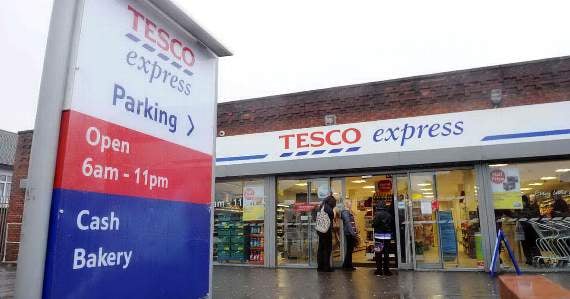
No trace of the spending spree can be found in easy-to-access public documents, nor are there any records of acquisitions being discussed at open meetings, including £38.8m spent in March on a Tesco Express in Quedgeley, Gloucester.
And it is understood only a select few councillors and council officers knew of the deals in advance. Back-bench members were told of the Tesco deal only after the shop was bought.
As well as the Tesco, since December 2017 the council has borrowed to buy properties in Northampton (£7.9m), Warwick (£13.25m), Alton (£1.085m) and Andover (£3.24m).



The loans from the government-backed Public Works Loans Board are given after “assurances from the authority it is borrowing within relevant legislation and its borrowing powers”.
In other words, the board takes the council’s word it can make the repayments before lending the cost of the purchase.
In effect, in what might be considered in the real world by some, it is a 100 per cent mortgage secured against property, or buyers’ assets.
This week, the council agreed consultants were paid a ‘finder’s’ fee for each property bought, but says it turns down up to 100 properties a year.
Managed by council leader Richard Millard and chief executive officer Sandy Hopkins, the council has a £200m loan agreement with the loans board.
The council says when its borrow-to-buy property portfolio is complete, it will generate about £7m a year in profit for services in East Hampshire.
East Hampshire District Council is just one of many local authorities borrowing to buy investment properties they believe will generate income to replace withdrawn government grants.
In a statement, the council said: “In 2008 the council received £6m in Revenue Support Grant (RSG), which included business rates.
“This year the council got no RSG, but kept the £2.7m in business rates it collected.
“So central government funding has reduced by £3.3m since 2008.”
A Local Government Association spokesman said: “Councils either accept funding reductions and cut services as a result, or make investments that can secure those services in the long term.”
Documents released by the Bureau of Investigative Journalism (BIJ) show that in the past two years, the number of councils investing in property has doubled.
In the year from April 2017, councils spent a total of £1.8 billion on investment properties, a six-fold increase from 2013.
Most of that money is borrowed from the government’s Public Works Loans Board (PWLB) at very low rates of interest.
Originally money from the board was meant only for capital projects, but in 2017 that restriction was relaxed, allowing councils to borrow to buy investment properties.
And councils like EHDC took full advantage of the favourable terms.
And accessing the money is simple. Effectively, all a borrower has to do is show it can repay the loan from the rent charged.
The BIJ says councils which borrow to buy to let become secretive about what they are doing. “Purchases are typically discussed behind closed doors in meetings where the public and press are not allowed to attend,” it says.
“Key details such as the name and address of the property, who identified it and how affordability was determined, as well as who provided the advice to buy them and how they might be profiting from the advice, are withheld from the public or hidden from sight.”
EHDC has followed the pattern, with selected councillors and officers dealing with the property transactions in private.
No-one can hold the authority to account over its buy-to-let dealings because nothing is made public.
Not even after the deal is done and confidentiality is no longer an issue, is the information regarding property purchases readily available.
And this so-called business model used by an elected body accountable to the public and transparent in its dealings, can lead to shorter public meetings, as more ‘business’ is done behind closed doors.
EHDC is responsible for services to around 120,000 East Hampshire residents – but as 43 out of 44 councillors are Conservative, there is no effective opposition to force debate of any kind into the open.
The council cabinet is responsible for the running of the council, how it funds services, and guiding its strategic direction, and meets monthly.
Yet in the past year, the cabinet’s public meetings have been recorded as taking at little as six minutes from start to finish, averaging between ten and 30 minutes – and even then some items were discussed only once the meeting was closed to the public.
EHDC leader Richard Millard was unavailable for comment but said he would be able to talk to the Herald later in the week.
Comments
This article has no comments yet. Be the first to leave a comment.