
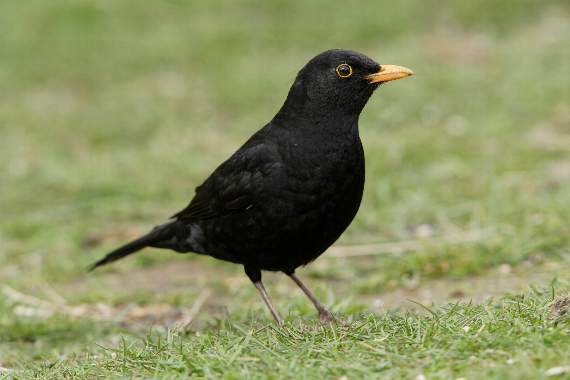
More than half-a-million people joined in the world’s largest garden wildlife survey, turning their eyes to the garden to watch and count more than eight million birds during the 37th RSPB Big Garden Birdwatch.
And the results realised some exciting and interesting changes among our most popular garden birds.
The event took place in January when more than 519,000 people from every corner of the UK counted an incredible 8,262,662 birds.
The mild weather in the months leading up to the 2016 Birdwatch affected bird behaviour, as it provided easy access to bugs and reduced their dependency on garden feeders.


-call-handlers.jpeg?width=209&height=140&crop=209:145,smart&quality=75)
In Hampshire, it was noticeable that smaller birds were able to survive the winter in greater numbers, with sihtings of the long-tailed tit and coal tit up by almost 10 per cent.
But starling numbers in Hampshire gardens were significantly down.
Dr Daniel Hayhow, the RSPB’s conservation scientist, said: “The weather can have varied effects on different groups of birds in terms of behaviour and habitats used. The increase in smaller garden birds just goes to show that in the absence of very cold weather these species can survive winter in much greater numbers.
“The warmer temperatures have made it easier to find food, like insects, which in colder winters would have been harder to come by because of frosts and snow.”
During periods of colder temperatures birds struggle to find food in the wider countryside so become more reliant on garden feeders. Smaller birds have adapted to feeding at bird tables or from hanging feeders.
Sara Humphrey, the RSPB’s communication officer for the South East, said: “The results show that smaller birds are increasingly using our gardens to find food. Sightings of long-tailed tits and coal tits rose by nine per cent and 8.4 per cent respectively against 2015 results for Hampshire.
“Despite this, many other of our garden favourites are struggling. Starlings no longer feature in the top three visitors to Hampshire gardens, now taking fourth place, with a four per cent decrease in garden sightings compared to 2015.
This continues a national trend that has seen the number of starlings visiting gardens decline by 81 per cent since the first Birdwatch in 1979.”
Ms Humphrey added: “Providing food, water and nest boxes in your gardens, outdoor spaces and even on balconies offer invaluable resources for starlings and other garden birds and can have a significant positive effect on local populations.”
The findings of the Big Garden Birdwatch are reflected in the parallel event, Big Schools’ Birdwatch, which continued to break records with more schools and children taking part than ever before. The UK-wide survey of birds in schools had close to 100,000 school children spending an hour in nature counting birds.
Blackbirds remained the most common playground visitor for the eighth year in a row. The top three was rounded off by the black-headed gull and the starling.
Big Garden Birdwatch and Big Schools’ Birdwatch are a part of the RSPB’s ‘Giving Nature a Home’ campaign, aimed at tackling the housing crisis facing the UK’s threatened wildlife.
The charity is asking people to provide a place for wildlife in their gardens or outdoor space, whether it’s putting up a nest box for birds, creating a pond for frogs, or filling outdoor spaces with nectar-rich plants.
Comments
This article has no comments yet. Be the first to leave a comment.