
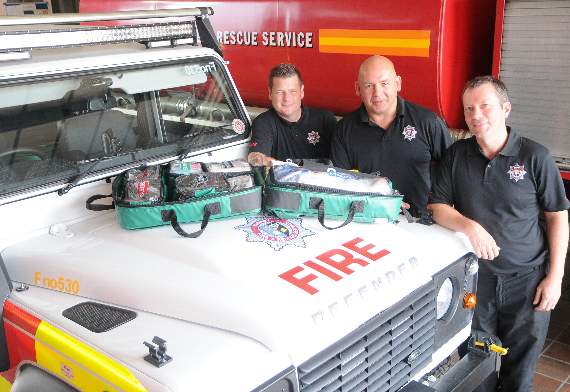
MANY people might be surprised that an emergency call to the ambulance service, might mean a fire engine turns up at the scene to help treat the injured.
Since last year – when Surrey Fire and Rescue equipped its entire 35-strong fleet with defibrillators and gave extra training to fire crews – more lives have been saved as a result of the new style 999 response.
In Haslemere, the 10 full-time fire crew and 13 team members on call, who man the station 24 hours a day, have all undergone special training. And over the last few months more than 300 Surrey Fire and Rescue Service personnel have been trained in emergency and trauma care skills.
The firefighters can respond to life-threatening emergencies such as cardiac arrests, chest pains and breathing difficulties.



In 2015, Surrey FRS launched a county-wide pilot co-responder scheme with South East Coast Ambulance (SECAmb) which means that on average, professional help can be with a patient within 10 minutes.
In situations when fire are likely to be able to get to the patient more quickly, SECAmb can request that they attend.
That means they are able to start assessing and treating patients while an ambulance is still on route.
Haslemere crew commander Mark Busby told The Herald the call-outs to emergency situations were averaging around four a month when the co-responder scheme started last year. But now they are up to six times a week with the team also covering parts of West Sussex.
The service works alongside the Community First Responders scheme which deploys volunteer paramedics to emergencies in the community, such as cardiac arrests.
Mr Busby added: “We also have the benefit of blue flashing lights of course, and a team of four people on the fire engine.”
The crews are also able to use their skills in other situations, including when gaining entry to properties when the alarm has been raised about the occupants and at incidents such as road accidents.
Comments
This article has no comments yet. Be the first to leave a comment.