
CAMPAIGNERS have won the first round of their battle to get Petersfield, Liss and the A3 corridor inside the boundaries of the proposed South Downs National Park.
Earlier this year, conservationists and town and parish councillors were horrified to find that these areas had been excluded from the proposed boundaries.
They mounted a fiercely-fought campaign to put the areas inside the penline and this week are celebrating victory in their first battle.
But environmentalists throughout the Petersfield area are warning this week that they will have to fight on to ensure the town, Liss and the A3 corridor remain inside the final boundaries which will not be known until next year.


The new recommendations to the Countryside Agency's board were announced on Wednesday. The board was due to make its decision yesterday (Thursday).
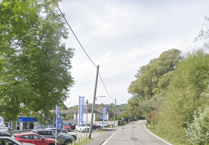
The Countryside Agency (CA) said that the whole of the A3 corridor (Upper Rother Valley), Petersfield and Liss should be included in the draft boundary on the basis of new evidence which showed that the recreational criteria were broadly met, despite the impact of the A3.
The report has also recommended inclusion of the Longmoor Inclosure.
"This is MoD land, but access is not normally restricted and so it meets the criteria," said the report due to go before the board yesterday.
But the Woolmer Forest, which had also been put forward for inclusion, has restricted access and the CA considered it did not meet the criteria.
The South Downs Campaign warmly welcomed most of the boundary proposals, but was concerned about some key areas that were not included, particularly in Hampshire. Extensions around West Tisted and north of Liphook and Bramshott had been left out, as had Alice Holt Forest and Woolmer Forest, despite meeting the criteria for designation.
Petersfield town councillor George Watkinson said: "Obviously I am pleased with the recommendation. We now go on to the next stage with renewed vigour and interest.
'The hard work of the team that investigated the pros and cons of Petersfield being included has borne fruit."
Chairman of Liss Parish Council, Jim Duckham, also welcomed the recommendations.
"The inclusion of Liss and the Upper Rother Valley came about through the pro-activity of the parish council, with the unstinting support and assistance of the Liss amenity groups acting under the umbrella of Villagers and Countryside (VAC).
"They put together a very solid case stating the attractive 'high value' landscape of Liss, maps showing the historical importance of the village, the wildlife and nature conservation values of the area, and the superior opportunities for quiet recreation.
"We are glad we are in, but it is no time for complacency. We hope that as many people as possible will attend the public meeting in Liss village hall on November 3, and subsequently write to the Countryside Agency, expressing their views."
Spokesman for VAC, Margaret Parren, said: "We are delighted that the agency has listened to the representations that Liss has made and now accepts that the area, including the Longmoor Inclosure, meets the criteria required for national parks.
"But this is only the first step: we must continue to campaign throughout the consultation period to ensure that Liss stays within the boundaries of the national park."
Internationally celebrated conservationist and botanist, Dr Francis Rose, said: "This is a very important event.
"I have always maintained that the Upper Rother Valley is exceptionally important in terms of nature conservation. I am delighted, therefore, that common sense has at last prevailed over the ignorance that led to its exclusion from the area of search.
"I am also very pleased to see the inclusion of Longmoor. It is a wonderful area in both recreational and conservation terms and is a worthy addition to the national park."
On the development control aspect, the report noted that a scheme which made use of existing local authorities' expertise would be more efficient, provide better accessibility to users and generate a strong partnership with the local authorities.
It recommended that the National Park Authority (NPA) should retain overall responsibility but establish a scheme of delegation to local authorities, such that they handle case work and take decisions against policies prepared by the NPA, and with the NPA able to take decisions itself on significant cases.
The South Downs Campaign particularly supported the recommendation that the park authority should be the planning authority, although they believed there should be delegation of the development control function back to local authorities for small planning applications.