
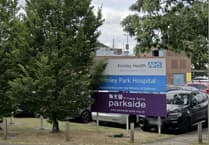
FRIMLEY Park Hospital will not be among the first wave of foundation hospitals after managers decided to delay applying for the semi-independent status.
Of the 32 top performing three-star NHS hospitals, which had expressed an interest to the Department of Health, 29 were this week shortlisted to pursue foundation trust status with effect from April.
Three trusts, including Frimley Park, have deferred establishing as foundation hospitals until October 2004 "in order to give them more time to improve and be better placed to make a success of the new model", said the Department of Health.
A spokesman for the hospital said: "The improvement which the Department of Health is talking about is largely financial in that we're operating a financial deficit of £3 million because the primary care trusts didn't allot that money to us, but we have got a recovery plan.


"We would also like to be a bit further down the line with some of our capital projects such as the diagnosis and treatment centre which would help us deliver the targets on cataract operations and orthopaedics."
Last week, The Herald reported how Frimley Park had sent a submission to the Department of Health stating its case.
Foundation hospitals will be freer from government control, run by a board of locally elected governors and able to set their own targets and rates of pay. They will also be able to raise funds through private borrowing.
But they have been the subject of much contention amid claims they will lead to a two-tier NHS and be the precursor to the abolition of free health care.
Meanwhile, the hospital has taken steps to reassure the public after a national newspaper reported it has a higher-than-average mortality rate.
An article in The Times reported the hospital's mortality rate is 106, the average being 100.
But a hospital spokesman said the figure was out of date and attributed it to the number of largely elderly bed-blockers on its wards at the time.
"Over the last 12 months, we've been running significantly over on the level of delayed transfers. These patients tend to be elderly.
"Ordinarily they'd be discharged but they end up staying longer and unfortunately dying here. But we've got on top of that with our partners in social services."