
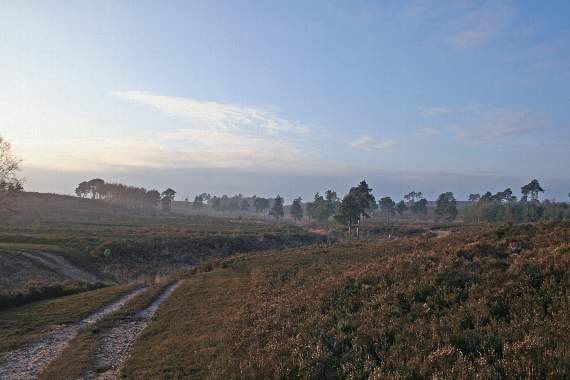
Carefully planned conservation work on sites including Poors Allotment, Ash Ranges and Barossa, led by the trust’s countryside team, is having a real impact on the numbers of birds spotted on the important lowland heathland reserves.
“This is incredibly encouraging news as we can really see how all our hard work is making a vital difference to wildlife in the county,” said Ben Habgood, the trust’s grazing officer.
“It represents thousands of volunteer hours cutting and clearing invasive scrub, grazing by our conservation herd, site patrols and litter picking, surveying and monitoring target species and occasional mechanical clearances. It’s been a long, hard slog, but it’s fantastic to see that some of Surrey’s most iconic birds are benefitting.”




Surveys on Ash Ranges near Woking found more than 150 pairs of Dartford warblers - the highest level since 2008, when populations were all but wiped out by cold winters.
Woodlarks were at record levels, with over 40 territories recorded and nightjar numbers were also nearly at record levels, with around 70 pairs. Other species such as tree pipit, stonechat and redstart were also at their highest levels for several years.
On Poors Allotment near Bagshot, a recent Natural England survey found the habitat to be much improved and in a ‘favourable’ condition, following years of work by the trust alongside The Heathland Conservation Society volunteers.
Nightjars and woodlarks are moving into new breeding grounds and the number of Dartford warblers has nearly doubled.
The trust’s work is helping wildlife across the county – 98 per cent of the Sites of Special Scientific Interest (SSSIs) it manages on behalf of Surrey County Council are now in favourable or recovering condition – up from just 68 per cent when the charity began caring for the sites in 2002.
The news of the trust’s impact on nature in the county comes in the wake of the publication of The State of Surrey’s Nature report, which revealed that wildlife was in trouble. A third of the 4,242 species studied were either extinct in the county or under threat, including water voles, hedgehogs and great crested newts.
Surrey Wildlife Trust CEO Nigel Davenport said: “Sadly wildlife in Surrey is under particular threat from new building developments and pressure on the green belt but we are determined to fight nature’s corner.
“The good news is that we are making a difference and we know what needs to be done in the future. We have pinpointed the areas where we have the best chance of reversing nature’s decline.
“But there is an awful lot of work to do. We can’t fight this battle alone. We need the people of Surrey, businesses and communities to help us – together we can achieve so much more.”
Anyone who would like to help wildlife is invited to sign up as a volunteer?
The public can also help the trust continue its work caring for the county’s wildlife by signing up as a member.
For all volunteering and membership enquiries visit www.surreywildlifetrust.org.
Comments
This article has no comments yet. Be the first to leave a comment.