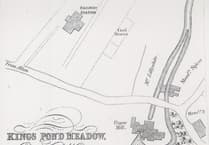
"IF you care, you can make a real difference to the future look of our town". That is the message from the Alton Town Partnership (ATP) whose representatives will be at Tuesday's meeting of East Hampshire District Council's community forum, for Alton and the surrounding villages, to present a draft of Alton's new town design statement. Keen to attract as many residents as possible to attend the meeting and provide some valuable input, local environment group leader, Mike Heelis pulls no punches. "To professionals and planners, architects and developers it's a 'built environment', a 'settlement' or a 'dwelling'. But to us, Alton is our town, the place we live in, our home," he said. By way of explanation he continued: "So often it's the professionals and planners, architects and developers that get the lions' share of the say in how our town will look, even the very part of town we live or work in. "There have always been new buildings and no town would want to stay the same forever, but if we look around us there are lots of buildings that would have been better not built or that should have been better designed to respect the nature and character of the area surrounding them. "It is the opportunity to gain more influence over the nature of the buildings built in Alton that has encouraged a group of people working together as the local environment group of the Alton Town Partnership, to begin laying the foundations of what will become the town design statement." According to Mr Heelis, once completed the town design statement will: l Describe the character of different areas within the civil parish boundaries of Alton and Holybourne and identify the attributes of development most suited to each, attributes which will reflect the residential and commercial needs of the town and the aspirations of the population living and working in it. l Provide, for residential, retail, leisure, commercial and industrial areas within the civil parish boundaries of Alton and Holybourne, detailed design guidance for landowners, developers and architects before they prepare proposals. l Provide design guidance for accessibility to the town now and in the future – streets, byways, public transport and signage. l Reduce unsympathetic development by providing the planning authorities with established guidelines, which can be used to secure improvements in planning applications. l Provide a framework justifying the rejection of applications that fail to meet our community's requirements and aspirations. When successfully completed, the town design statement will become supplementary planning guidance, a key control instrument in the whole planning process. "But," warns Mr Heelis, "and this is a big but, it will only achieve this level of influence over the future of our town if the people who live here are actively involved in the process that decides what the guidelines should be. It can't be the design vision of the few – that's been the past system and we all know the mistakes this approach has delivered. "It must be a community-wide and community supported vision: What do we value? What must we protect? Where should or shouldn't we develop? What do we think developments should look like? The real power of this design statement to influence our town's future will be the greater, the greater the number of people that have their say and get involved. "We've worked hard to make a start, to develop a framework but it has to be down to Altonians to make the real progress, to make the real difference. Our initial thoughts – maps, photographs and words – will be on display at the community forum meeting this Tuesday." Starting at 6-30 pm at Eggar's School, this month's community forum will include a public question time when members of the public are invited to ask questions on general matters affecting the local community; a presentation of the access to service awards scheme, and the presentation of several grant applications. All are welcome.