
FARNHAM’S NHS clinical commissioning group (CCG) was held up as a shining example of how the health service is “getting it right” last week, as NHS England chose the area to announce its vision for the future of the NHS.
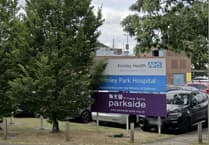
In March 2015, the NHS North East Hampshire and Farnham CCG, responsible for planning and buying health services for around 220,000 people centred around Frimley Park Hospital, was selected as one of 29 areas to spearhead national changes in patient care under the NHS Vanguard scheme.
Now, two years on, the national press pack, NHS bosses and local health professionals gathered at the Aldershot Centre for Health last Friday as chief executive Simon Stevens set out his two-year plan for rolling out many of the CCG’s improvements across the UK.
Mr Stevens said: “The reason we’re here in Aldershot this morning is because much of the work that many of you are doing is proof positive that the practical improvements we want can be brought about.


“You are already doing many of the things that we want to see more of right across England.”
Describing the changes as “probably the biggest national move towards integrated care currently under way in any Western country”, Mr Stevens outlined a blueprint for transforming the way health and social care is delivered to ease pressure on hospitals and A&E departments, as well as delivering “practical improvements” in areas prized by patients and the public – namely cancer care, mental health and GP access.
Changes proposed by the NHS England boss include:
• Improved cancer care aimed at saving an extra 5,000 lives a year through new one-stop testing centres, screening programmes and state of the art radiotherapy machines.
• Boosting mental health services by increasing beds for children and young people to cut out of area care, more beds for new mothers and more mental health professionals in the community and hospitals to prevent crisis admissions.
• Better access to GP services with everyone benefiting from extended opening in the evenings and weekends, newly designated ‘Urgent Treatment Centres’ and an enhanced 111 service to ease pressure on A&Es.
• Better care for older people by bringing together services provided by GPs, hospitals, therapists, nurses and care staff, cutting emergency admissions and time spent in hospitals.
• Driving efficiency and tackling waste to make money invested in the NHS go further in delivering the services and staff that patients want, including the latest treatments and technology.
Speaking to The Herald after Mr Stevens’ announcement, chief officer of the North East Hampshire and Farnham CCG Maggie Maclsaac said: “We’re absolutely delighted that Simon Stevens chose to come down to our patch. We are already doing a very many of the things now proposed by NHS England, and it’s really great for our frontline staff to see their work being celebrated.
“Over the past two years we have been, if you like, experimenting on behalf of the country along with many other Vanguards, and we’ve been testing it and seeing how it works. It is because of some of the results that we’ve started to get, that the national NHS is saying ‘do you know what, these are the kinds of things that we need to do’.
“So I really think for the people who live in our patch, this is fantastic news, it’s recognition that we’re doing the right things and it signals an acceleration of that work, backed by the national team.”
Key to the CCG’s Vanguard programme, Mrs MacIsaac explained, has been the integration of local health and social services. As a result, GP practices now work in closer harmony with councils, mental health providers and the voluntary sector, with the principal intention of freeing up hospital beds for those who really need it.
She continued: “It is about doing more things in the community and at home, preventing people from getting ill, diagnosing people earlier, helping them to keep well, and then for the people who really do need the more acute care, they can get it and get it really quickly. It’s about the whole thing working together.”
But while the CCG has made great strides in many areas - improving access to mental health services through initiatives such as the Safe Haven centre in Aldershot for instance - it also acknowledges there are areas that still need work.
Dr Peter Bibawy, the CCG’s clinical director for urgent and emergency care, said: “Increased demand on hospital services is a real issue and we are yet to make a really big difference in it. But there is no linear solution. It is a highly complex problem that requires non-conventional solutions.
“Our job now is to take the policy areas where we’ve already started and improve, and for those areas where we are yet to start, to rapidly implement the changes proposed by NHS England and work at pace. So it’s a challenge for us as well.
“This is not a top-down approach, it is about listening to local communities and identifying their individual health and social care needs.”
Comments
This article has no comments yet. Be the first to leave a comment.