
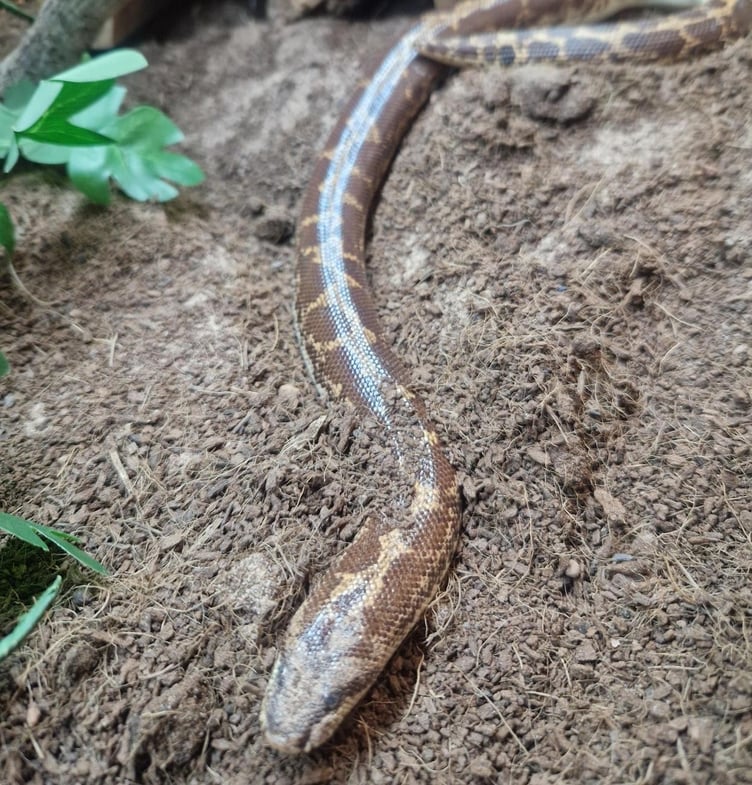
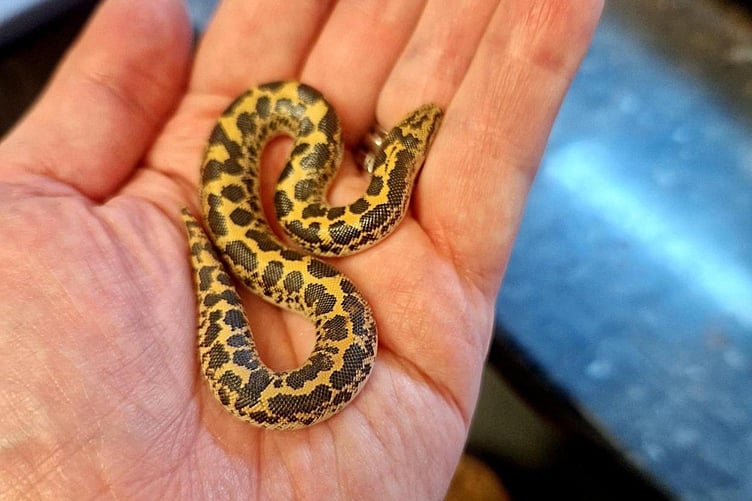
How’s that for a sssurprise? A female Kenyan sand boa called Dolores has produced a litter of nine without a mate.
Dolores, part of the animal collection at Merrist Wood College and University Centre near Guildford, has lived a solitary life for 20 years, enjoying the care of her dedicated keepers.
Imagine their surprise, then, when they discovered that Dolores had reproduced via parthenogenesis – a form of asexual reproduction where offspring develop without fertilisation – resulting in nine healthy offspring.
Normally, reproduction involves an egg from a female being fertilised by sperm from a male. But with parthenogenesis, an egg can develop into an embryo without being fertilised.
Merrist Wood report that Dolores has previously tried to clone herself, with varying unsuccessful results, four times over the past few years, the first in 2018. At this, her fifth attempt, she succeeded.
Parthenogenesis is rare in snakes, although it has been documented in several species of boas, pythons and other snakes.
In March this year the BBC reported that a 14-year-old Brazilian rainbow boa constrictor - Ronaldo, originally thought to be male - had given birth to a litter of 12 offspring without mating at the City of Portsmouth College , echoing her multiple virgin births two years earlier.



.jpeg?width=209&height=140&crop=209:145,smart&quality=75)
Some other animals, including certain sharks, lizards and insects, can also reproduce through parthenogenesis.
Scientists are still studying why it happens in some species. It can occur even when females have access to males, so it is not necessarily a response to being alone.
However in situations with few or no males it does guarantee reproduction and allow for swift colonisation of new habitats.
Taggie Gatchell, Merrist Wood’s head of animal collections, said: “There’s never a dull moment working with animals; they fuel our passion and ensure we are always learning.”
The babies are being kept in safe, warm environments in the animal management centre nursery.
Comments
We've recently changed our login process. If you have an account for commenting, you will need to re-register on the login window.
This article has no comments yet. Be the first to leave a comment.