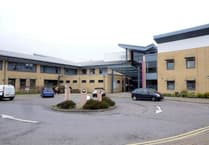
AN extraordinary general meeting of Alton Community Association members, held in the car park in front of a locked community centre building on Tuesday evening, has called for the immediate reinstatement of former centre manager Richard Swainston. Mr Swainston had resigned his position on July 24 following a breakdown in relations with the ACA board of trustees. At Tuesday's meeting the 28-strong band of members also agreed that if current Alton Community Association trustees felt unable to work with Mr Swainston then they (the trustees) should stand down. The meeting had been shocked by a revelation that unless Alton Community Centre could raise a surplus of £2,000 to £3,000 every month until the AGM in December, it could be forced to close. Concerned over a perceived lack of support by the trustees to keep the centre open, members seemed to feel there was no alternative but to ask for the reinstatement of the manager as a way of securing a future for the centre. The meeting, deemed unconstitutional by the trustees, began with a statement from the ACA board, delivered by trustee David Gay. Mr Gay warned that the meeting did not have the sanction of the ACA, and that its agenda did not meet the criteria of a properly constituted EGM – a fact confirmed by the Charity Commissioners. He also said that ACA trustees were not prepared to condone and sanction, on ACA property, a meeting which they deemed contrary to the best interests of the ACA. And, he made it crystal clear that "the resignation of Richard Swainston was properly accepted by the ACA trustees and in accordance with normal business practice, resigning senior staff are always asked to leave immediately. Mr Swainston will not be re-employed by the ACA. "The reasons for accepting the resignation are complex and valid. The ACA is not prepared to discuss those reasons against a background of misleading, aggressive, offensive and insulting e-mails or through the local press and media. "The ACA will issue a statement, once a full review of ACA affairs has been completed." In conclusion Mr Gay reconfirmed the purpose of the board. "The trustees were elected at an AGM to manage the business of the ACA and the community centre. The trustees have, and are, acting in the best long-term interest of the ACA and its members despite the problems this presently causes them jointly and individually." Mr Gay then left the meeting without staying to answer questions. As a result there was concern among those present that they did not have the full picture when voting to reinstate the manager. And they were angered by the fact that the building was locked and that they had been forced to meet in the car park. They were more inclined to see it as an indication of the board's lack of commitment to the centre rather than a statement of the meeting's unconstitutional nature. In his opening speech, Mr Swainston had sought to counter the board's view by stating that the Charity Commission had confirmed to him that it was in order for at least 20 members to call an EGM if they felt the governing body was not fulfilling the charity's aims and objectives or that it was not being administered properly. And in his view the trustees were guilty of "maladministration". Mr Swainston claimed he had made a proper booking at the centre but that the ACA had decided that it was not an appropriate use of the building and had cancelled the booking. He understood they had further agreed that no-one else should be able to book to use the premises to hold a meeting opposing the board. "They referred to the centre as 'our' building - that is the whole point. It is not their building, it is everybody's building. That just about sums up the trustees' attitude," countered Mr Swainston who had been angered also by the trustees' refusal to advertise the EGM before his employment terminated last Friday. Because there were no trustees present, the meeting had to elect a chairman and a secretary before Mr Swainston felt free to outline what he described as the "very serious situation" that had led him to call an EGM. He reminded the meeting that four years ago the centre had been under threat of closure and he feared that history was about to repeat itself. He said that his relationship with the board had begun to deteriorate in May of this year when he had expressed concerns about trustees' use of ACA resources for purposes other than the benefit of the association. Mr Swainston had asked for a review into use of ACA resources and into the responsibilities of ACA trustees and staff. The result had been an investigation by the board into communication clashes between the ACA chair and the centre manager, and Mr Swainston was given a written warning and offered training in management skills. The final straw had come when the ACA had blocked access to money which, he said, was to be used to pay staff. "Apart from jeopardising my ability to meet our payroll obligations, I felt that it totally undermined my ability to do my job. I resigned by e-mail." Having been shocked by the "indecent haste" in which his resignation was accepted by the ACA board, and their insistence that he take "gardening leave" rather than work out his notice, Mr Swainston said that he had been in constant e-mail contact with trustees to try and reverse his resignation. "I would like to come back - I feel I still have a lot to give, I would do my best to keep this place open." He continued: "The trustees have no intention of replacing me - this place will be managed by a committee. They'll probably use my salary to make up the shortfall." After the meeting, Mr Swainston confirmed to The Herald that the centre was once again in financial trouble. "We are due to post a substantial loss for this financial year (ending August 31). I can't give you figures as I don't have access to them. However, I don't believe that they are sufficient to cause the closure of the centre and we still have more than £40k in our reserves," he said. At the meeting, talk inevitably turned to the prospect of a new xommunity centre building which, Mr Swainston felt, would not happen without somebody driving it from the ACA. "There are some trustees who were prepared to turn their back on the local authority (EHDC) being prepared to invest £3 million in a new building and would rather stay in the existing building, and others who would like to see investment at any level, even if it means a small building. What we need is a building fit for purpose - whether new or a revamp," he said. Should he be reinstated and the current trustees resign, as he believes they should, Mr Swainston was confident that at least three people were waiting in the wings to take up the reins until the December AGM. Whilst aware that the Board was unlikely to recognise the decision taken by the meeting to reinstate Richard Swainston, 23 people voted in his favour. It was agreed that Mr Swainston himself should approach the trustees to inform them of the outcome, and there was a suggestion also that two ACA members should be invited to site on the board as observers and that Mr Swainston should report to them. The minutes of the EGM are to be sent to the Board and to the Charity Commission. The meeting also agreed, by a show of 28 hands, that a debate was needed to discuss the relationship between staff and trustees. In the meantime Richard Swainston confirmed that he had lodged a complaint of mismanagement by the ACA trustees with the Charity Commission and that he would be suing for constructive dismissal.