
The nationally scarce striped lychnis moth is in decline across the UK but can be found in small numbers at Butterfly Conservation’s Magdalen Hill Down Reserve, near Winchester.
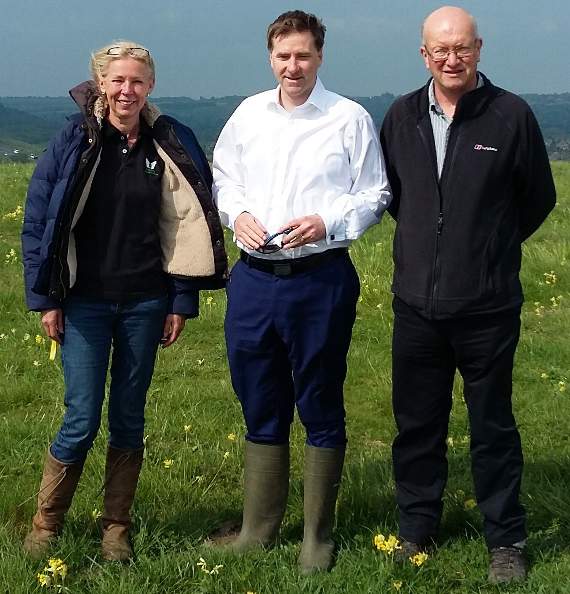
Steve Brine visited the reserve last week after becoming a ‘species champion’ for the elusive, night-flying moth.
He said: “I am thrilled to be working with Butterfly Conservation to raise the profile of this special moth and I’m hoping that by being a species champion I can contribute to securing its future here in Hampshire.




“It was great to see the reserve where this moth and so many beautiful butterflies can be found. Magdalen Hill Down is a wonderful place to visit and I’d encourage everyone to get out here this summer to see it for themselves.”
Rachel Jones, conservation officer for Butterfly Conservation, said: “The role of the species champion is to promote good management for the selected species and to raise the profile of wildlife in Parliament.
“There are now 26 MP species champions across England and we’re really grateful that Mr Brine has chosen to support Butterfly Conservation and in particular this declining moth.”
The striped lychnis is rarely seen and its wings are decorated with a series of light and dark brown stripes – the perfect camouflage for resting on branches or against tree trunks.
Its caterpillar is striking in comparison, boasting a series of black and yellow splodges against a pale, greenish-yellow body.
The caterpillar feeds almost exclusively on a plant called dark mullein, an attractive tall biennial or short-lived perennial. The plant, which has silvery-green leaves and yellow flowers, used to be a more common sight on countryside road verges and field margins, but changes to land management has seen it gradually disappear.
Butterfly Conservation volunteers have been planting dark mullein on the reserve to try to encourage the moth to breed there and earlier this month Mr Brine was given a guided tour to see where the conservation work has been taking place.
Magdalen Hill Down once formed part of a First World War Army camp but is now nationally recognised for the many butterfly species it supports, with more than 10,000 seen there every year. At least 400 species of moth can also be found there.
To find out more about conservation work and volunteering on the reserve, e-mail reserves officer Jayne Chapman at [email protected].
Comments
This article has no comments yet. Be the first to leave a comment.