
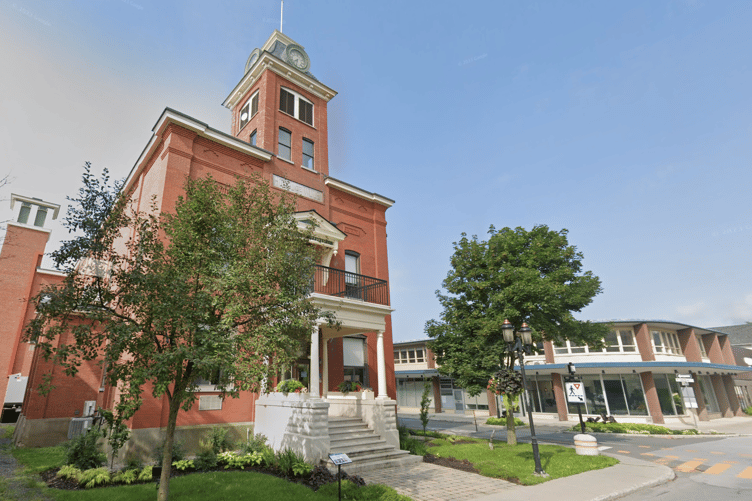
With the United States marking the 250th anniversary of the Declaration of Independence last week, one of the American Revolution's lesser-known legacies can be found in a town that shares Farnham's name.
More than 3,000 miles from Surrey lies Farnham, Quebec.
Its story began in the turbulent years that followed the War of Independence, when thousands who had remained loyal to the British Crown left the newly created United States and settled in British North America.
The United Empire Loyalists prompted the British government to establish new townships in what was then Lower Canada, including the Township of Farnham, proclaimed in 1798.
The man most closely associated with its creation was Samuel Gale (1747–1826), a Hampshire-born surveyor and Deputy Surveyor General of Lower Canada.
On October 22, 1798, Gale was granted the eastern portion of the new township. Historians believe he chose the name Farnham after the Surrey market town.
The first Farnhamiens, as the town's residents were called, arrived around 1800. Most were British loyalists who set about clearing the dense woodland, building homes and establishing farms along the Yamaska River.
After years as a small village, the settlement’s fortunes changed with the arrival of the railway in the mid-1800s, turning Farnham into an important junction linking Montreal with the Eastern Townships and the United States. The resulting growth led to the village's incorporation in 1862 and its elevation to town status in 1876.
Like Farnham in Surrey, the Quebec town has strong military connections. During both World Wars, thousands of soldiers trained there, and the site remains an important Canadian Armed Forces training facility.
Today, Farnham is home to around 11,000 people, with an economy based on agriculture, manufacturing and the military.

However, while the town’s name remains unmistakably English, modern-day Farnham is overwhelmingly French-speaking. Like the rest of Quebec, around 95 percent of its residents have French as their first language.
Comments
We've recently changed our login process. If you have an account for commenting, you will need to re-register on the login window.
This article has no comments yet. Be the first to leave a comment.