
PEOPLE opposing a controversial housing development in Ropley have criticised plans to remove peregrine falcon nesting sites.
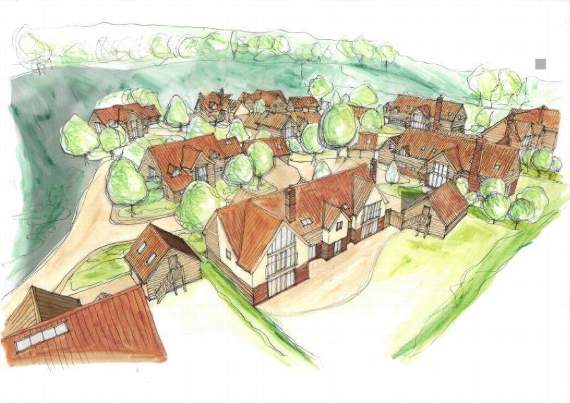
Hornbeam Homes hopes to build 11 new houses at Ropley Lime Quarry, on Soames Lane – land described by objectors as “an important nature and conservation area”.
The application comes following approval for six homes on the site, granted in September last year. However, in August the developer returned with a larger version of the plan.
Resident Ewan McGregor criticised the proposal and said the peregrine, the fastest member of the animal kingdom, is a “symbol of survival against all the odds”.
.png?width=209&height=140&crop=209:145,smart&quality=75)


“Persecution and insecticides threatened them with extinction,” he added. “These spectacular birds – they can reach speeds of 110 miles per hour – are now making a slow recovery and in 2015 a pair nested in a cliff face in the disused Ropley Lime Quarry and successfully raised a pair of chicks.
“All four birds have made the quarry their permanent home.”
He said that as the new houses will “require the destruction of this precious nesting site” and that the birds will be lost “not only to Ropley but this part of Hampshire forever”.
However, Ben Pearce, a planning consultant at LD&PC Ltd, which is representing the developers, said a detailed ecological management plan has been submitted with the application, which outlines a raft of measures to mitigate the damage to all wildlife, particularly falcons.
Mr Pearce said there are thought to be “20 breeding pairs” of peregrines in Hampshire, so the species is “not a major priority” in terms of local conservation.
He explained that, subject to permission being granted, when construction begins the ledges will be made temporarily less appealing for the birds, once they have vacated the nest.
But he said that it is the building work itself, as opposed to the homes, that would deter the birds, so it is plausible they would return.
He cited successful breeding in the centre of Winchester and Salisbury as examples of peregrines thriving in built-up areas.
A supplementary ecology report was submitted to East Hampshire District Council (EHDC)?on October 16, detailing how applicants would “minimise the potential impact of the development on breeding birds”.
These measures include planting new hedgerows and trees and only working on site between August and January when peregrine nests should not be active.
The ledges the falcons used during this year’s nesting season will be “regraded to remove this nest site (between August and January) and reduce the potential for peregrines to nest during the construction period”.
And other suitable nesting ledges on the quarry faces will also be removed between August and January to deter nesting next year.
“In the event that peregrines begin to nest in the quarry, construction activities will cease until any chicks have fledged (likely to be July 2016),” the report added.
And when construction is complete developers will install a nest box and will create “at least three new ledges” in the quarry faces to provide alternative nesting sites.
However, they did admit that the disturbance from increased human presence may “reduce the likelihood of peregrines occupying such a nest box or ledges”.
The developers will also contribute to the Hampshire Ornithological Society, which currently maintains eight peregrine boxes around the county.
Despite all this, opposition has come from Ropley Parish Council and Four Marks Parish Council, and 70 public comments have been submitted to the district council objecting to the scheme.
Mark Kemp-Gee, a Hampshire county councillor for Alton Rural ward, objected to the previous application and has followe suit with this one.
He said the quarry has become “an important nature and conservation area”, adding that “in no way is building houses here sustainable”.
EHDC’s planning committee will vote on the application.
Comments
This article has no comments yet. Be the first to leave a comment.