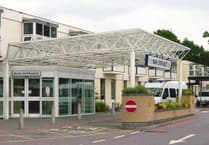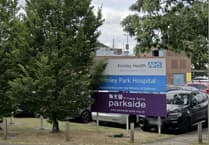
A ROWLEDGE man, who suffered the double blow of being diagnosed with cancer on the same day as his wife, has spoken of his outrage at being denied the therapy three consultants and his GP have recommended. Bill Elliott, 61, a sports writer for The Observer, has found himself in a sadly unique position in being able to compare his treatment to that delivered to his wife, Val. Devastatingly, the pair received their diagnoses just 55 minutes apart - he at Frimley Park Hospital, where he was told he had prostate cancer; she at the breast clinic at the Royal Surrey in Guildford. Val, 60, who retired last month after working as a child protection expert, has undergone a lumpectomy to remove a small tumour and was this week beginning a course of radiotherapy. She has been prescribed Arimidex, an expensive, but highly successful, drug given after surgery. Bill, by contrast, has hit a brick wall with the Guildford and Waverley Primary Care Trust (PCT) in his bid to secure the treatment he wants and which has been recommended for him. The treatment concerned is brachytherapy, a relatively modern procedure which costs £11,000 - £2,000 more than surgical removal of the prostate. The cash-strapped trust, he claims, is blocking the therapy on cost grounds alone. His GP, he said, has written to the PCT expressing "outrage and contempt" at the decision. While awaiting the outcome of an appeal against the refusal, Bill has been campaigning through newspaper and radio interviews to draw attention to the fact that breast cancer treatment currently receives 10 times more funding than prostate cancer treatment. Speaking to The Herald before departing for the Open golf championships, he asserted his determination that he will not pay for the treatment, which he understands has also been denied to seven other local men. The Elliott's lifelong decision to rely on the NHS and not take up private health insurance was made on a matter of principle, he said. "I want to get the therapy funded for myself and others in the same position. I am on the equivalent of a hunger strike - I will die first." Bill pointed out that patients cannot merely pay the extra £2,000, because this would make for a two-tier system of treatment. Yet the system is already two-tier, in that in some parts of the country brachytherapy is available to NHS patients, in others it is not. "It is the equivalent of a postcode lottery, to use a cliché. "Three consultants have recommended a specific treatment for me to cope with prostate cancer, that is available to other men in other parts of the UK, but I have been turned down. "That is an outrage, and despite the fact that we live within nine miles of a major centre of excellence for cancer treatment at the Royal Surrey." Brachytherapy involves planting around 100 radioactive seeds within the prostate gland to kill off the cancer. It carries the advantages that the patient avoids the risk of incontinence and impotence that radical surgery poses. Often patients do not even need to stay in hospital overnight. "It is suitable for me, I fit the profile, my cancer is at an early stage," said Bill. He said to date he had been offered no form of treatment at all, except the hormone tablets aimed at keeping the cancer from worsening and which cost his GP practice £300 a month. The process of waiting for the wheels of bureaucracy to turn is adding to the stress suffered by family, including the Elliotts' two sons, friends and in particular his wife. "This is not helping helping her in a difficult time in her life, as you can imagine. "The PCT does not take a proper holistic approach. All they are trying to do is to save money. They are playing with my life and the lives of the other seven men and ultimately with the lives of other men all over the country." A spokesman for the PCT said she could not comment on an individual case, but revealed that of seven requests received for brachytherapy last year, all but one were refused. Five requests had been made this year, and all were refused. "The PCT does look at each case on a case by case individual basis. These are considered from the clinical point of view by an independent GP and by our director of public health, who has advice from appropriate specialists together with a statement from the patient's clinicians. "They are looked at mostly on the clinical evidence, because there are a range of other treatments." The spokesman indicated that brachytherapy has been approved by the National Institute for Health and Clinical Excellence as a safe treatment, but the institute had not yet made its recommendation regarding cost effectiveness and clinical effectiveness. A medically-qualified panel is convened to determine appeals, which are decided with the benefit of additional information from the patient's GP and consultant in a process taking one to two weeks.