
BRAMSHOTT and Liphook Parish Council agreed to adopt the now completed parish plan despite fears it would “over-promise” and “under-deliver”.
Councillors were reluctant to agree to a full adoption but after a lengthy debate during Monday evening’s meeting they felt that subject to funding, necessary staff and volunteers being available, they could vote in favour.
Concerns were raised that due to current staff shortages the plan would put an impossible burden on the executive officer and his staff, as well as councillors, and that additional costs would arise which could not be met.
Robin Young, a member of the parish plan steering committee, assured councillors funding certain aspects of the plan would not be a problem, and that the parish council would not need to be actively involved in all of the activities proposed.
-call-handlers.jpeg?width=209&height=140&crop=209:145,smart&quality=75)


The Parish Plan, which has taken five years to complete, proposes the formation of two new bodies – a Liphook Chamber of Commerce and a development trust to help address some of its key findings.
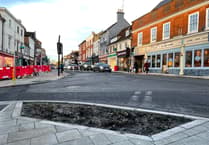
Highlighted by the plan are the community’s main concerns which include the crossroads at the heart of Liphook in the village square, causing traffic congestion; poor infrastructure, particularly sewers; and the shortage of sports and social care facilities.
Steering committee chairman Trevor Maroney stated the plan presented potential solutions and brought them to the attention of the relevant agencies and authorities.
He told the meeting: “The solutions rely on working in partnership with these, and every effort has been made to agree workable solutions with lead partners within the current economic environment."
“As a live document the plan will continue to evolve with its steering group monitoring each partner’s performance,” he added.
“In addition, it is anticipated some actions will be taken forward by the neighbourhood plan’s steering group, others will rely on community self-help schemes led either by the parish council or the proposed development trust.
“It is desirable the vision is community rather than commercial development-led.
“To activate this, it is essential the parish plan has the continued support of the community, as it represents the distillation of their collective wish to remain a village and yet achieve a more vibrant and sustainable community,” said Mr Maroney.
Newly-appointed parish councillor Susan Garnett called the plan an “impressive” document and said she hoped to use its findings as a base for the forthcoming neighbourhood plan – in her capacity as chairman.
The parish plan identifies certain key areas which require improvement, starting with infrastructure to meet the rising demand for more housing and to ensure the village retains its roots and remains sustainable.
It states roads, drainage, utilities, communications networks and facilities have to be able to support the corresponding growth in population and failings should be rectified before the imposition of more housing.
In addition, the plan points out that local businesses need bigger and better premises with good access to the A3 and must offer a wider range of goods and services to encourage more customers to shop locally.
They also need a clear marketing strategy to entice new business investment by uniting and forming their own chamber of commerce, according to the masterplan.
Transport issues form a large part of the findings predicting the volume of traffic will increase quite considerably over the next few years and the current lack of adequate public transport, particularly for hospital appointments, is affecting the community – as are poor daytime and weekend bus services.
Lack of parking and disabled access at the village railway station are also highlighted and a comprehensive traffic management plan is proposed, together with a feasibility study into a two-storey parking facility at the station with a lift for the disabled – Haslemere has just been awarded finance from South West Trains for a new car park.
The plan also proposes support for young people, who currently have few evening activities available for them that would stimulate their interests in life skills such as photography, web design, mechanics, cooking and baking.
The plan recognises the need to provide facilities and activities that stimulate mind and body for young and old alike and help promote healthy living, which include sports pitches, indoor courts, welfare and social care facilities.
Proposals include studies into community facilities for the elderly, disabled, carers, youth, a sports centre and a swimming pool.
At local level, the plan recognises the need for collaboration between different agencies and organisations and sets out to achieve this with the proposed chamber of commerce and Liphook Development Trust as the two collaborative projects that are aimed to help the needs of the community.
“What will be needed is a design and fund raising body to generate investment in sustainable community projects”, Mr Maroney stated.
“Volunteers for the Liphook Development Trust will need business acumen, marketing and fundraising skills. The intention is to set up a voluntary trust to deliver specific projects as funds become available.
“Since it would be a voluntary organisation there will be some benefit in obtaining charitable status.
Mr Maroney concluded: “The parish plan should form a solid foundation in the preparation of the neighbourhood plan.
“Its findings will help the parish council and other organisations to develop and justify future projects and the neighbourhood plan would form part of a statutory development plan, that will have the weight of being a legal document and as such highly influential in local planning decisions within the area.”
Comments
This article has no comments yet. Be the first to leave a comment.