
THE Hampshire branch of the Campaign to Protect Rural England (CPRE) has emphasised the need for affordable homes in its response to a public consultation on Britain’s housing crisis.
The consultation document – Planning for the Right Homes in the Right Places – drawn up by the Government, sets out proposals to boost housing supply and includes a standard method for calculating local authorities’ housing need.
But CPRE Hampshire believes this method will result in a further increase in disparity between areas of different wealth, with yet more housing and investment channelled to already wealthier and prosperous areas to the detriment of poorer areas.
Its policy group chairman, Christopher Napier, told The Herald: “The proposed method of assessing housing need perpetuates the myth that simply building more houses in areas of high housing prices will somehow improve affordability, when evidence is already clear that it will not.




“The housing market is broken and the real need is to build many more houses of a type and size affordable for the younger generation now largely excluded from the housing market.
“A policy must be designed which is targeted at the 25 to 34-year-old age group.”
The housing need formula, as proposed, has no relationship with availability of infrastructure, public transport options, water resources, employment or the impact on protected areas, such as the South Downs National Park, according to CPRE Hampshire.
The charity is concerned the proposed increase in housing numbers – combined with Government proposals to consider local authorities’ Local Plans out-of-date after five years from adoption – will lead to a return to speculative applications by developers claiming the lack of a five-year supply based on the new housing need assessment (which is proposed to apply immediately where plans are more than five years old).
East Hampshire District Council and the South Downs National Park are in the final stages of getting a Local Plan adopted covering development up until 2032.
According to CPRE, parts of southern Hampshire will be expected to accommodate additional homes, and this will extend into East Hampshire, which will mean extension of developments into sensitive rural areas and villages.
Mr Napier added: “The assessment of housing need contained in a Local Plan should be regarded as fixed and valid for an absolute minimum of five years from the time the plan is adopted.
“Otherwise the concept of a plan-led system becomes meaningless. This would magnify uncertainty and plunge communities back into an era of free-for-all and planning by appeal.
“If Local Plans become out of date in this way, then so will Neighbourhood Plans, likely leading to much disillusion within communities when they realise their Neighbourhood Plan will not endure for the stated period – despite being endorsed by community referendum and the result of much dedicated work by individuals.”
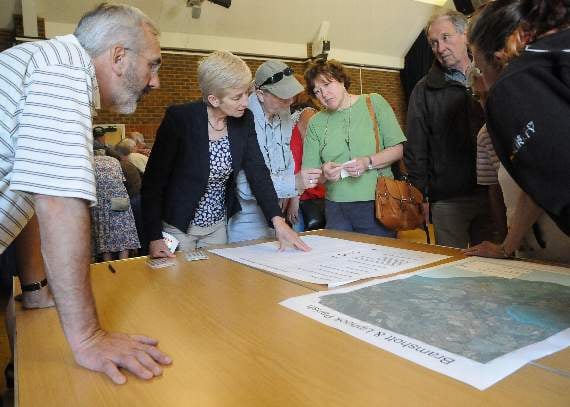
Liphook’s Neighbourhood Development Plan has been held up by a series of disagreements involving the parish council over the composition and role of its steering group, having agreed to spend £15,000 on preparing one back in 2016, two years after it was first mooted.
After the original steering group chairman Susan Garnett and the co-opted members stood down earlier this year, they were replaced by parish councillor Emma Winfield and nine other new members in the summer.
The final one of a series of three design forums held by consultants Feria Urbanism, based in Bournemouth, was completed earlier in December.
•CPRE Hampshire is campaigning for a more strategic approach to planning. Find out more at www.cprehampshire.org.uk
Comments
This article has no comments yet. Be the first to leave a comment.