
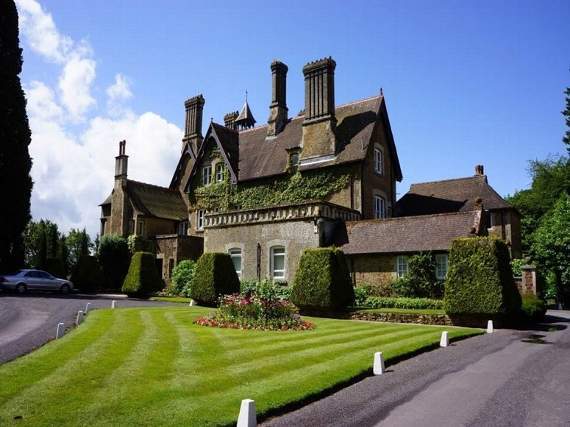
CAMPAIGNERS battling to prevent up to 29 houses being built at Longdene House in an area of outstanding natural beauty have welcomed the rejection of the “unsustainable” plan on appeal - a dramatic reversal of an earlier appeal decision.
The scheme has been the subject of a lengthy planning battle that included a High Court challenge by Waverley Borough Council.
Waverley’s successful legal objections to comments made about its Local Plan by the inspector who allowed the scheme on appeal in September 2017 meant the application had to be re-determined by the Planning Inspectorate.
Landowner Tony Lawson, who also has outline planning consent to build 132 houses on the Area of Outstanding Natural Beauty (AONB) at neighbouring Sturt Farm, accused Waverley of wasting taxpayers money on pursuing the legal challenge.



Following an inquiry held from October 12-19 and on November 19 last year, a second planning inspector, John Woolcock, has reversed his colleague’s verdict and dismissed the application refused by Waverley in 2016 for a change of use from office to residential and the demolition of two dwellings, greenhouses and outbuildings to make way for 29 new homes at the site in Hedgehog Lane, Haslemere.
Mr Woolcock said he had taken into account the submissions and judgments about the relevance of the previous inspector’s decision and noted the appellant’s view is that it should be the starting point for the assessment of any supplementary evidence. But he said that in law a quashed decision should be treated as if it has not been made, and so had considered the matter afresh.
He had determined the appeal on its merits and “come to a different view”.
The scheme would have provided 10 affordable homes - six rented and four shared ownership - financial contributions towards playing pitches, playground, sport and leisure, waste and recycling. Plus a contribution towards early years and primary education.
The main issues up for determination were the effects of the proposed development on the character and appearance of the area and the AONB, highway safety and supply of housing land.
Mr Woolcock found that Waverley cannot demonstrate a five-year supply of deliverable houses that would help fend off unwelcome developments. But he supported the borough council’s objections to the scheme on AONB grounds.
He said the tree-lined approach through open countryside, to what was a country house with some parkland features, “makes an important contribution to the landscape character of this part of the AONB”.
The inspector shared Waverley’s concern that the outline planning permission proposed would be likely to result in long-term harmful effects on nearby large trees, arising from pressure by future occupiers to cut or lop trees because of shading or other adverse effects of large trees near their homes.
He also considered the “urban road configuration” proposed would be out of keeping within the setting of a former country house within Haslemere AONB.
Mr Woolcock disagreed with campaigners who objected the extra traffic would cause road safety problems. He described the local road network as “not ideal” but did not consider allowing the scheme would make it “materially worse”.
He agreed the additional dwellings would make a significant contribution to the supply of housing in Haslemere, which has been allocated 990 new homes by 2032. Building 10 affordable dwellings would also be “particularly important in providing for local needs”, but he believed the housing benefits did not outweigh the harms caused.
Dismissing the scheme, Mr Woolcock concluded: “The appeal scheme would provide additional housing in Haslemere, including affordable units, in an area of need.
“There would also be some benefits to the local economy and to biodiversity. But in my judgement these benefits would be outweighed by the harm to the character and appearance of the area, along with the harm to the AONB, which attracts great weight.”
Comments
This article has no comments yet. Be the first to leave a comment.