
WAVERLEY Borough Council is under pressure to allocate sites for up to 625 new homes per year, as developers and residents packed into the council offices in Godalming this week for a six-day public examination of its latest attempt at a Local Plan for future development.
The number attending was so great at the outset of the examination last week that two additional rooms had to be used for the overflow from the public gallery.
A number of critical questions were posed in April by the hearings inspector Jonathan Bore, following his first sight of the draft document for part one of the local plan, which covers strategic policies and sites for the 10,000 new homes Waverley has estimated it needs by 2032 to meet government targets.
Local plans have to meet the local objectively assessed need for both market and affordable houses but Mr Bore considered Waverley’s housing figures, “based on older household projection figures”, were inadequate.
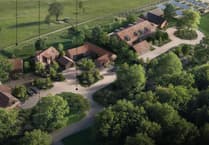


He also queried why allocating up to 2,600 houses at Dunsfold Aerodrome was justified, given the plan statement that most new development will be located around Farnham, Godalming, Haslemere and Cranleigh, “which have the best available access to jobs, services, housing and community facilities”.
Mr Bore asked why more housing land had not been allocated in Haslemere, Farnham and Godalming “in the interests of a sound sustainable development strategy”. He also queried if Cranleigh, “a considerably smaller town”, was a suitable location for the volume of growth proposed.
Waverley’s decision to defer most of its proposed green belt changes to meet housing need to part two of the plan, also came under fire.
“Does this approach provide enough certainty for local people and landowners,” he asked. “Does it act as an unnecessary impediment to timely housing delivery and can these sites be relied upon to contribute towards future housing delivery”.
Specific site allocations in Farnham, Milford and Cranleigh also fell short. Mr Bore wanted more information on “practical measures” taken to mitigate the impact at Coxbridge Farm, Farnham; he considered part of the planning policy underpinning the Green Lane, Farnham, site “unsound”; he queried how 100 houses in addition to retail could be accommodated at The Woolmead, Farnham; and he criticised the allocation of 180 houses opposite Milford Golf Club as “inconsistent”.
Welcoming Mr Bore at the start of proceedings, Waverley head of planning Liz Sims said: “The submitted Local Plan is part one of a two-part Local Plan and it sets out the strategic policies and sites for the plan period 2013 to 2032.
“We believe that the plan meets the tests of soundness, as set out in the National Planning Policy Framework. We look forward to robustly defending that position, particularly against the objections that have been made.
“Notwithstanding, the council wishes to engage positively in a process that ensures that the plan is found sound and can proceed eventually to adoption so as to give a firm basis for planning decisions in the borough going forward, commensurate with the plan led system.
“Mr Bore, on this basis, the council makes a formal request to you, to recommend main modifications, such as are needed, to make the plan sound.
“A sound and up-to-date plan will allow us to more effectively provide for Waverley’s development needs while ensuring that development also protects or enhances the exceptionally attractive environmental quality of the borough.”
Cracking into action, Mr Bore expressed concern that Waverley’s projection of housing demand, based on 2012 household figures, “does not pay due attention to 2014 figures” and as such is out of date and inadequate.
He challenged the council to come up with a better “starting point” including a significant increase, perhaps 25 per cent, to take into account affordability and possibly meeting 50 per cent of the shortfall in provision caused by Woking’s inability to meet its objectively assessed need.
Find out about planning applications that affect you by visiting the Public Notice Portal.
This could see Waverley’s housing figure soar to as many as 625 new homes per year - up from the 512 homes per annum originally proposed by the borough council.
Comments
This article has no comments yet. Be the first to leave a comment.