
CONFIRMATION that “at least” 519 new houses need to built each year in Waverley to provide 9,862 over the next 16 years - including 1,200 on the green fields surrounding Farnham - is provided in the borough council’s draft Local Plan.
The draft document gives the green light for a new settlement of 2,600 homes at Dunsfold Aerodrome, the home of BBC’s Top Gear - making the outline application submitted by Dunsfold Park for 1,800 houses, due to be determined in August, effectively a “done deal”.
By opting to build 2,600 new homes at the airfield by 2032 in its draft Local Plan, Waverley will need to build 2,300 homes by then on greenfield land across the borough, the majority on fields surrounding Farnham and Cranleigh.
This week, Waverley Lib Dems accused the Conservative-led administration of “ignoring the clear results” of Waverley’s 2014 housing Local Plan consultation, in which the overwhelming majority of those responding - 80 per cent - backed the council’s scenario of 3,400 at the airfield to reduce the number needed on greenfield sites.
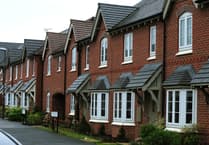



The Farnham Society also repeated calls this week for Waverley to prioritise building on brownfield sites, starting with 3,400 homes or more at Dunsfold Park, but praised Waverley’s draft Local Plan for acknowledging that Farnham’s road network “is already the most congested” in the borough.
The third version of Waverley’s blueprint for future development, which has been nine years in the making, gets its first airing on Monday, when it will be considered by the borough council’s joint overview and scrutiny committee.
Time is now of the essence as the government has told councils to produce their Local Plans by early 2017 or it will take them over.
Input from Waverley’s ‘watchdog’ committee on Monday will be considered by the decision-making executive at its committee meeting on Tuesday, July 12, before it is presented to full council for final approval on Tuesday, July 19.
If approved, the plan will be submitted in November for examination by a Planning Inspector.
The draft Local Plan increases the number of new homes needed each year from its 2014 target of 470 to 519, making 9,862 rather than 8,460 by 2032. Waverley withdrew its draft Local Plan in 2013 after being warned by the planning inspector that its annual housing target of 270 was too low.
Objecting to the new draft plan, Waverley Lib Dems chairman Stewart Edge said Waverley was turning a blind eye to the wishes of residents and its draft Local Plan was flawed.
He told The Herald: “Eighty per cent of those responding to Waverley’s own consultation wanted 3,400 at Dunsfold Aerodrome but the council have proposed only 2,600 for Dunsfold. With the total numbers required also having gone up, Farnham’s total has increased from 1,800 to 2,330, with over 1,200 rather than 700 on green fields. Cranleigh have come off even worse.
“The Conservative-dominated council have always sought to minimise development at Dunsfold - we will be working to demonstrate, eventually to the Inspector, that the plan is flawed and should be changed.”
The Farnham Society added in a statement: “Building new dwellings on the borough’s largest brownfield site makes sense, saving green fields and other green spaces around Farnham, Cranleigh and other settlements…in accordance with current Government policy.
“The report to the Waverley joint overview and scrutiny committee acknowledges that in considering the infrastructure to allow the development of Dunsfold Park ‘consideration has been given to the impacts around Farnham, where the borough’s road network is already the most congested’.
“However, feedback from Surrey County Council, the Highways Authority and Guildford Borough Council on transportation reports could influence the final allocation of housing.
“The society accepts that new houses have to be built in and around Farnham but wishes these to be located as proposed in the Farnham Neighbourhood Plan, due very shortly for its second public consultation.
“It is essential that the draft Local Plan and the Neighbourhood Plan are adopted as soon as possible for the sake of the borough and Farnham.”
Housing targets by 2032 for Waverley’s four main settlements are 2,330 for Farnham, 1,520 for Cranleigh, 1,240 for Godalming and 830 for Haslemere. Housing allocations for smaller villages include 150 in Elstead, 15 in Tilford and 10 in Churt.
Noting the public’s preference for building 3,400 houses at Dunsfold Park, the council said it now considers the airfield can be “sustainably developed” with up to 2,600 homes, but added any more would result in a high number of homes in the eastern part of Waverley “and a less balanced strategy”.
Referring to the increased housing target for Farnham, the borough council said as the largest town in Waverley with fewer constraints than some other towns, it “needs to play an important role in delivering future housing”.
Farnham is close to Thames Basin Heaths Special Protection Area, but Waverley said sufficient Suitable Alternative Natural Greenspace capacity had been identified to deliver the new housing planned.
Nine ‘strategic sites’ are allocated in the document as being able to deliver more than 100 houses and a combined total of 4,450 by 2032.
In addition to a new settlement at Dunsfold Park, they include 350 homes at Coxbridge Farm, Farnham; 100 homes at Green Lane, Badshot Lea; and 100 homes at The Woolmead, Farnham.
But intriguingly, the 239 apartments proposed in Waverley’s Brightwells regeneration scheme are not mentioned in the report.
Comments
This article has no comments yet. Be the first to leave a comment.