
THEY have provided a home for Farnham’s “poor honest old impotent persons” for four centuries – but now the historic Andrew Windsor almshouses in Castle Street are themselves in desperate need of the community’s help.
The Grade II listed almshouses – founded in 1619 by Andrew Windsor of Bentley, whose grandfather was keeper of Henry VIII’s ‘great wardrobe’ – are in urgent need of roof repairs and restoration.
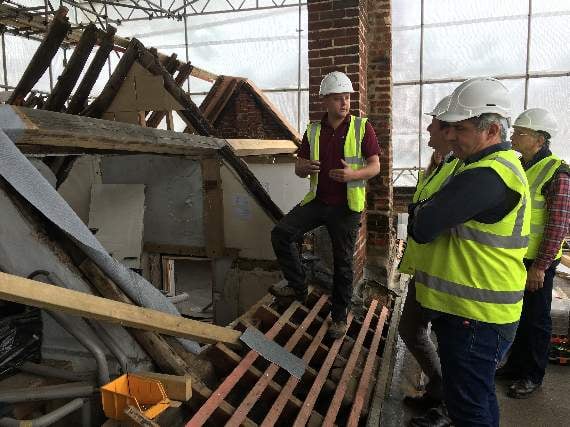
The remedial work is already well under way, as evidenced by the impressive scaffolding erected over the building by restoration specialists Owlsworth.
However, the reserves of the charitable trust in charge of the building’s upkeep are getting perilously low – and so a campaign has been launched online at www.justgiving.com/andrewwindsor-almshouses to help raise the £500,000 needed for the essential works.



The almshouses were built exactly 400 years ago, born into the religious see-saw of the Tudor age, just two years after the death of Shakespeare and shortly before the outbreak of the Civil War to give the poorer members of society a refuge from the upheaval.
Although the country’s current strife pales in comparison with the violence of the 17th Century, as the almshouses celebrate their fourth centenary, they still fulfil their original purpose today.
Modern-day chairman of the trust, Michael McAleenan, invited the Herald, along with members of the Farnham Society, for a tour of the work site last week – led by site manager Fred Clift, whose company Owlsworth has previously worked on Winchester Cathedral and the Tower of London.
In opening up the almshouses’ historic but dangerously sagging roof, Fred explained that they discovered a mix of oak and (less flexible) elm beams and trusses – many of which had themselves been re-purposed in the building of the almshouses, with the oldest timber dated back to 1271.
But while much of the original timber will have to be replaced, Fred and his skilled team are taking great care to re-use original materials where possible, and ensure the almshouses retain their character and “lovely shape”.
Fred told the Herald: “We don’t want to rip everything out – that’s not the point. We want to re-use as much as possible so that when we take the scaffolding away in September passers-by won’t notice any difference.
“It is a bit of a challenge, but we like a challenge!”
Comments
This article has no comments yet. Be the first to leave a comment.