
POLICE budgets are expected to be dealt another hefty blow in November when the Chancellor announces the next round of spending cuts.
Having seen £80million axed from a £360million budget since 2010, resulting in the loss of 750 officers and 900 support staff in line with the rest of UK police forces, Hampshire Constabulary are expecting to face further cuts which, according to deputy police and crime commissioner Robin Jarman, could be anything from 25 to 40 per cent.
The former police officer told East Hampshire District Council’s (EHDC) Community Forum: “We are facing extremely difficult times.”
In addressing the forum at the end of last month, Mr Jarman said such cuts were “unprecedented” and, until the announcement on November 25, it was difficult to see in which direction Hampshire Constabulary would be going.



But one thing was clear – with such a huge reduction in staffing levels there was a need for radical change in the delivery of policing.
In Hampshire, it has led to a centralising model, with districts based on council areas, led by a chief inspector. In East Hampshire, the team is headed up by the District Commander, Chief Inspector Beth Pirie.
To save money, the police and crime commissioner has developed an estates strategy which has already sold off more than 50 per cent of Hampshire Constabulary’s buildings, to be replaced with purpose-built units or, more often, seeking to share buildings with other organisations.
In Petersfield, police are due to relocate to EHDC’s offices at Penns Place, and Alton’s station is also scheduled to close.
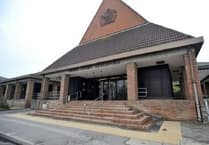
According to Chief Insp Pirie, while there is no fixed date, a move is on the cards so the building, which also houses the magistrates court, can be sold off.
The estates department is currently looking for a new location locally which would still facilitate easy engagement with the community, and be expected to house the existing 999 response team and the neighbourhood policing teams, working in partnership with the community safety team.
Partnership working is key to the current policing role, with the introduction of such initiatives as the Victim Care Service, the development of victim awareness courses for offenders, with the emphasis on reducing re-offending, and further development of community partnerships.
Despite the upheaval, crime levels in East Hampshire remain low.
While concern was raised last month when nationally-led changes to the way in which crime figures are recorded resulted in what appears to be a 36 per cent increase in crime, Mr Jarman assured people it was “not a true reflection of the situation”.
The difference had apparently arisen from the need to record every reported incident prior to investigation.
The nature of crime is also changing with less burglary, non-dwelling burglary and vehicle crimes, but more cyber crime and child sexual exploitation cases, a lot of them historic and triggered by the Jimmy Savile case.
According to Chief Inspector Pirie, who has been in her post for just over a year, officers spend 60-70 per cent of their time dealing with non-criminal incidents.
In reiterating the fact that East Hampshire has a very low crime rate, she gave an assurance that despite future cuts, as an already “lean” force Hampshire was “very well-prepared to face the challenge” and was working really hard to continue to provide an efficient and effective service.
A bid by the parish of Upton Grey and Candover to pay for its own community police officer was rejected by the PCC who did not want to create a two-tier system based on affluence.
EHDC recently used public money to employ three support officers who would benefit the community as a whole. But staffing is an issue, and will lead to operational changes which could, in future, mean officers may not be able to get to every crime called in.
Chief Inspector Pirie, who is in charge of policing in Liphook and Grayshott, warned vehicle crime may not be investigated if there was no CCTV coverage or independent witnesses.
She flagged up the importance of such community initiatives as Neighbourhood Watch, Countryside Watch, Street Watch and Speed Watch in supporting local policing.
But in some cases, policing cannot be left to volunteers. Nonetheless, the public remain the eyes and ears of policing in the community and the police chief flagged up the force’s new online alert system – www. hampshirealert.co.uk – which enables people to receive information, such as appeals, warning of incidents, and crime prevention advice.
While it is not a reporting service, Ch Insp Pirie stressed the importance of reporting crimes and incidents to the police via 101, or 999 in an emergency.
Comments
This article has no comments yet. Be the first to leave a comment.