
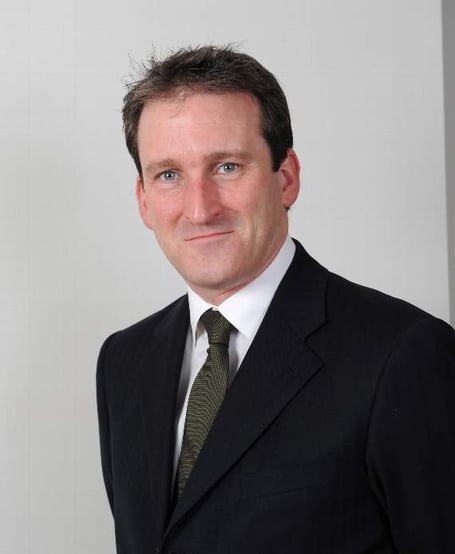
EAST Hampshire MP Damian Hinds has welcomed the Prime Minister’s call for a General Election.
On Tuesday Theresa May announced plans for the Election on June 8 - three years earlier than scheduled.
Under the Fixed-term Parliaments Act, terms last five years - however, elections can be held early with enough support in the House of Commons.
Mr Hinds echoed the Prime Minister’s justification for the snap election, saying the need for strength was greater than ever as Britain takes the first steps towards leaving the European Union.



“As we embark on one of the most important negotiations ever for our country, it is vital that we have the strongest position possible,” he said. “We have a one-off opportunity, while the EU agrees its negotiating position among the 27 countries, before the detailed talks.
“This is a time for strong and stable leadership - a General Election can give that. The UK economy has continued to grow, creating jobs and opportunity, and affording the quality public services we all rely on, in East Hampshire and nationally. It’s vital we maintain that record. At this Election the choice will be a clear one between strength and stability through Theresa May or weakness and instability under Jeremy Corbyn.”
East Hampshire is seen as a safe seat for the Tories, with Mr Hinds taking the baton from fellow Conservative Michael Mates in 2010. Mr Mates had represented the constituency since its creation in 1983.
In 2010 Mr Hinds took 56.8 per cent of the vote in East Hampshire, with 30.5 per cent going to the Liberal Democrats.
But fast forward to 2015 and, while Mr Hinds’s share of the vote leapt up to 60.7 per cent, it was UKIP who came in second place, with the Liberal Democrats seeing a nationwide drop in support.
But East Hampshire Liberal Democrat leader Alan Waterhouse was optimistic.
“I am very surprised, as many are, by the announcement to hold a General Election in June so quickly after the local county elections in May,” he said. “I am looking forward, as all Liberal Democrats are, to see how we perform nationally this time round.”
The UK Parliament has 650 seats. The current political makeup of the House of Commons is: 330 Conservative, 229 Labour, 54 Scottish National Party, nine Liberal Democrat and 28 others. This gives the Tories a working majority of 17.
Whitehill and Bordon councillor Adam Carew - who stood against Mr Hinds in 2010 as a Liberal Democrat before joining the Conservatives in 2013 - said: “Voters have a stark choice at this election - it is either Theresa May’s Conservatives or Jeremy Corbyn’s Labour Party propped up by the few remaining Liberal Democrats and Nicola Sturgeon’s SNP.
“Theresa May is keen to be elected in her own right and set out her stall for a stronger, fairer Britain.
“Britain voted to leave the EU and Theresa May is clearly frustrated by the other parties trying to prevent that democratic decision to a halt and prevent this happening. She needs her own mandate now before negotiations start in earnest.”
The hope for the Conservatives, whose popularity may wane under the coming negotiations with the EU, is they will increase their majority.
According to the BBC, the average of five opinion polls published in April puts the Conservatives on around 43 per cent compared to just over 25 per cent for Labour - a lead of more than 17 per cent. If this translates to votes, the Tories would see a comfortable win in June.
But with the unpredictability of any vote, combined with Brexit muddying the water, the leading parties are expected to campaign hard.
In announcing the call for an election, Mrs May talked about the need for “certainty, stability and strong leadership” as Britain leaves the EU. “At this moment of enormous national significance there should be unity here in Westminster, but instead there is division,” she said. “The country is coming together, but Westminster is not,” she said.
“If we do not hold a General Election now their political game playing will continue, and the negotiations with the EU will reach their most difficult stage in the run-up to the next scheduled election.
“Division in Westminster will risk our ability to make a success of Brexit and it will cause damaging uncertainty and instability to the country.
“So we need a General Election and we need one now because we have, at this moment, a one-off chance to get this done while the EU agrees its negotiating position and before the detailed talks begin.”
Comments
This article has no comments yet. Be the first to leave a comment.