
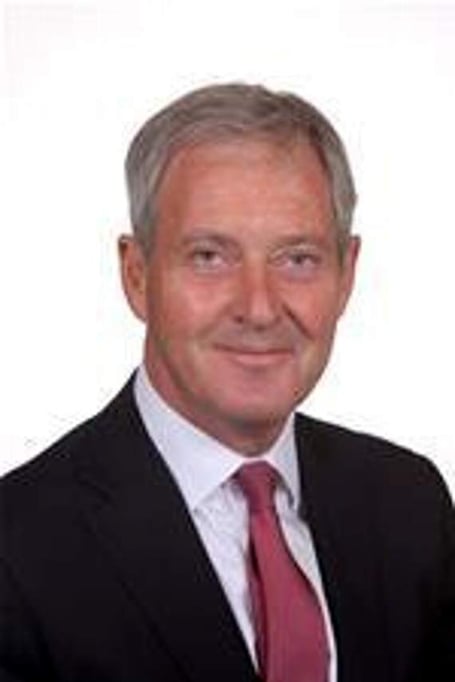
SURREY County Council leader Tim Oliver has promised his “commitment” to find a solution to Farnham’s pollution issues – but has called on residents to do their bit too.
Citing the so-called ‘Wigan deal’, in which Wigan Council in 2011 agreed with residents to work together to create a better borough, Mr Oliver called on residents to “recognise that they are a significant contributor to these issues”.
Mr Oliver said: “We all recognise that the biggest cause of air pollution is traffic, and a significant portion of car journeys are very short. Residents need to leave their cars at home, and we need to make it easy and safe for them to walk, cycle and to find other forms of transport.”
Expanding, he said the county council is working on a new health and wellbeing strategy for Surrey, including plans to reduce the need for people to travel to outpatient appointments. Health appointments account for 11 per cent of all car journeys, he said.


_-004.jpeg?width=209&height=140&crop=209:145,smart&quality=75)

Of all the factors contributing to life expectancy, he said 30 per cent relate to behaviour and “the things you can control”, such as whether you exercise regularly, smoke or drink, what you eat – while just 20 per cent relate to health interventions, and the remaining 50 per cent are all issues controlled broadly by local government.
Doing its bit on the latter, he said the county council is also working on a Rethinking Transport plan with the aim of “getting people out of their cars and on to public transport, walking, cycling” – including the potential for a council-run fleet of electric buses.
Mr Oliver added that, as the highways authority, “it is incumbent upon us to start taking more active roles in these projects”.
He also stated Waverley has the “honour” of possessing the wards with both the highest, and the lowest, life expectancies in Surrey – and that the new health strategy seeks to address this inequality of life expectancy.
On pollution, Mr Oliver said air quality “is absolutely central” to the council’s health strategy and accepted “there is a very real issue” in Farnham.
Commenting on proposals for a cycle super-highway, HGV restrictions and part-time pedestrianisation in the town centre, he added “it does look as if there are some quick wins that can be had”.
However, he stressed there are 1.2 million residents in this county, 3,000 miles of road and pavements, and more than 100 town councils and parish councils – all of which place significant demands on the county budget.
He did though highlight the council’s emerging growth of infrastructure plan as a potential source of funding for longer-term schemes such as the Wrecclesham/western bypass and a reconfiguration of the A31 Hickleys Corner junction.
Mr Oliver said: “The government has talked about providing an infrastructure fund, and the county will be putting significant capital funding behind schemes next year. We need to look at a prioritisation of those schemes, but even if some of these things can’t be put in the first wave, I would hope that they would be on that list.”
He concluded: “We’ll see where we get to in terms of solutions in Farnham. But you have my commitment on behalf of the council to do everything we can to support this.”
Comments
This article has no comments yet. Be the first to leave a comment.