
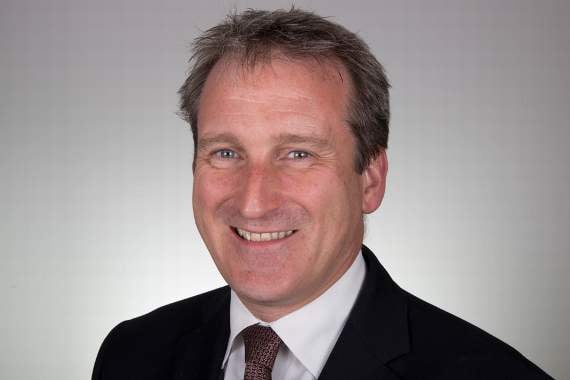
THE Prime Minister’s draft Brexit withdrawal agreement is the best option on the table, according to Education Secretary Damian Hinds.
Mr Hinds this week outlined his position on the plans which have seen cabinet resignations and called Theresa May’s premiership into question. In a detailed statement, he also criticised people trying to “thwart” Brexit and said not acting on the referendum result would be “undemocratic”.
The 585-page agreement document discusses the UK’s departure from the European Union (EU), but not any permanent future relationship. It covers money the UK must pay to the EU, the so-called divorce bill, outlines the transition period and addresses citizens’ rights.
But critics fear the UK could end up following EU rules for an indefinite time, without having any say on how they are written – in effect being left with the worst of both worlds.


However, Mr Hinds firmly backed the document ahead of next week’s EU summit.
“We are now close to a deal on exiting the European Union, and the outline of our future relationship agreement,” he said. “The next steps are the European Council meeting on November 25, consideration by the European parliament, and of course debate in our own Parliament, which I expect to be extensive and thorough, followed by the meaningful vote in Parliament.
“This will be a vote on government policy, but this goes far beyond party politics. This is about the future of our country, about a stable and orderly transition to a new relationship with the EU, about seizing new opportunities across the world, and about protecting jobs and livelihoods. It will be a robust debate. But ultimately I believe the choice at hand will focus minds – across all parties.”
Mr Hinds said the question when considering the agreement is not “whether you like it or not” but rather “whether you like some other viable alternative more”.
“Right now, we have two key documents,” he explained. “The first is the draft Withdrawal Agreement. The second is the outline Political Declaration, which sets the key parameters for negotiation of the full future relationship.”
The Withdrawal Agreement covers: protection of the rights of both EU citizens in the UK and UK nationals living in the EU; a transition period; a financial settlement estimated at £35-39bn and the border concern between Northern Ireland and the Republic of Ireland.
The outline Political Declaration includes things like ending free movement, a “free trade area for goods”, the right to “strike trade deals around the world” and various other items, such as transport access, energy markets and the security partnership.
“This is the culmination of many months of negotiation – not just from the Prime Minister and the Brexit secretaries of state, but by some of Britain’s finest diplomats and a huge analytical, legal and support team of officials,” Mr Hinds added.
“Although obviously people will rightly discuss and give an option on individual aspects of the draft deal, we cannot simply say whether on balance we like it or we don’t. It is a package. And as I say, it only makes sense to compare it to some actual deliverable alternative package.”
Ultimately, he believes “there is no alternative negotiated deal package available”.
“And any attempt to reopen negotiations could of course also lead to adverse developments,” he explained.
Doing this could risk two other outcomes, neither of which “would be good for Britain”.
“First is the risk of no Brexit at all,” Mr Hinds said. “It is not clear how this would come about, nor what the stance of some of the EU 27 would be, given their own varied domestic political pressures.
“But there are people in British politics who would like to thwart the Brexit process, and there are various devices they may seek to use to do so. Having had a referendum – a “people’s vote”, you might say – it would be, in my assessment, undemocratic not to act in good faith on its result.
“Second is the risk of ‘no deal’. We are told sometimes that there is no majority in Parliament for no deal. In my assessment this is correct, but that may prove irrelevant. Ultimately, ‘no deal’ just means, literally, that you haven’t managed to make a deal: it is the default position.”
Mr Hinds campaigned for remain and said he was “disappointed in the result”. However, he feels now is the time to deliver on it and “secure the best Brexit deal”.
“We have so much going for us as a country,” he concluded.
Comments
This article has no comments yet. Be the first to leave a comment.