
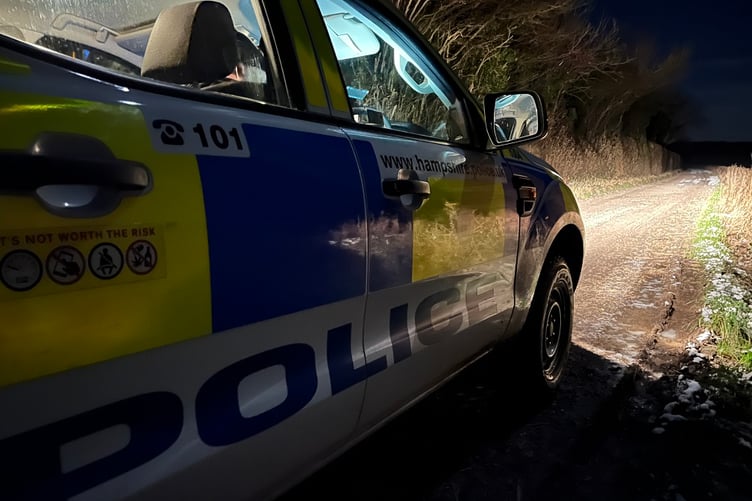
Rural policing is improving across Hampshire and the Isle of Wight, farmers and landowners have told the Police and Crime Commissioner, despite ongoing problems with hare coursing, fish poaching and fly-tipping.
The issues were raised as countryside communities met with senior police leaders at Apsley Farms near Andover for the latest Rural Engagement Forum.
Landowners, farmers and gamekeepers said there had been clear improvements in rural policing over the past 12 months, citing more positive police response times, but said day-to-day contact with neighbourhood policing teams could be better.
There was also increased confidence that officers now had better awareness of the range of rural crimes taking place, while Local Bobby training has expanded to include significant rural elements, with support from the Country Land and Business Association and the National Farmers Union.



The training covers the financial impact on businesses of equipment and livestock thefts, an overview of industry challenges and the mental health issues faced by farmers, landowners and gamekeepers.
Police and Crime Commissioner Donna Jones said: “We have a large county police force, and we have been on a journey. Rural crime was not prioritised properly over the last decade, we are now recovering from that.
“Since becoming Police and Crime Commissioner, I made tackling rural crime one of my main priorities. These people, their businesses and the communities within which they live and work, have all suffered greatly from the impact of criminals in our countryside areas.
“However, through the investment I have made in the Rural Crime Task Force, in recruiting more officers, introducing the Local Bobby scheme, whilst also getting more drones and more of the right vehicles for countryside policing, we are getting there.
“The feedback here from landowners and farmers from some of the largest estates across Hampshire and the Isle of Wight, is that police response times are good.
“We do need to improve further, with a proactive approach to ensure our rural communities know their Local Bobby, building local relationships which will result in an even more positive impact on these areas.
“Ultimately though, charge rates are going up in the rural community, crime rates are coming down, and the community are getting a good response time from police in Hampshire and the Isle of Wight. That is most encouraging.”
Assistant Chief Constable Tara McGovern, force lead for local policing, said: “It is important to understand the reality of the impact of crimes and policing on the rural community.
“These landowners, farmers and gamekeepers are key stakeholders for us who are at the heart of their communities, and they are telling us about improvements they’ve seen in our policing, but that they’d like to see more. I would also like to see more.
“We’ve heard that what we are doing in rural areas is better now than it was 12 months ago, but there are always further improvements to be made.
“Meetings like this are vitally important as they provide a total reality check on how things look and feel on the ground.”
The Rural Crime Task Force has been taking a proactive approach to dealing with hare coursing using drones and is aware that it is often the same people responsible for that activity as well as fish poaching and waste crime.
Donna Jones said she would help strengthen the approach to salmon poaching by raising it with the National Rural Crime Board, and she is also lobbying for legislation which would see police more directly involved in dealing with waste crime where it is of an organised and serious nature.
The PCC’s Rural Engagement Forum will merge with Hampshire and Isle of Wight Constabulary’s Rural Crime Partnership in the new year, chaired by ACC Tara McGovern, to expand the group and bring greater levels of reach and impact for both the rural and policing sides.
The next Rural Crime Partnership event will be held in February 2026.
Comments
This article has no comments yet. Be the first to leave a comment.