
WAVERLEY councillors have closed the door yet again on the Redgrave being reopened as a theatre - but have not ruled out the possibility of a new theatre on an alternative site. Having granted landowner consent for Crest Nicholson Sainsbury's to submit a planning application for East Street, including demolition of the Redgrave, there is no going back. That was the verdict delivered by Waverley's environment and leisure overview and scrutiny committee, in a recommendation that will now be considered by the council's ruling executive. The committee had received a presentation from theatre expert Michael Holden, a UNESCO cultural consultant, who was commissioned by the Farnham Theatre Association to produce a business plan to indicate whether a purpose built theatre for the town could be self- sustaining. Labelling Farnham as "a town that has largely lost its confidence", he described it as nevertheless one of the most advantaged areas of England. "It has a population with an enormous capacity for enjoyment and utilisation of entertainment facilities. . . if ever there was a place where a theatre should be, then Waverley, and Farnham in particular, is that place." His analysis of the situation was that a theatre could be sustained in Farnham without requiring revenue funding, But he added: "There is no theatre in the world, including the West End, that makes a return on its capital." If the Redgrave is to be demolished, however, Mr Holden argued that the "cultural capital" invested in it - £250,000 in 1973, worth £4 million today - should be made available. "Then it would be possible to build anywhere" The chairman of the theatre association, Ann Cooper, had prefaced his presentation with a stinging reminder to councillors that they were there to serve the public, "not to serve the interests of developers, who seem to be able to get everything their own way and to benefit from the wiping out of part of Waverley's cultural heritage". She emphasised the eagerness of Farnham people to have working theatre back, pointing out that the United Voice of Farnham, representing numerous Farnham organisations, had urged that the Redgrave should not be demolished until there was the guarantee of a permanent replacement. "A lot of theatres closed at the same time that the Redgrave went dark and are now reopened. It is not impossible to get your theatre back and working," Mrs Cooper added. But director of leisure Peter Maudsley pointed out: "We do have a landlord's consent in place, which includes a use for the land occupied by the theatre for a town square and an anchor store." He put the cost of reinstating the building at £7 million and referred to many thousands of pounds ploughed into the theatre in the past through business plans that had failed. Victor Duckett said he was concerned that Waverley had denied the theatre association access to the site, hampering their assessment of the situation. But committee chairman John Sandy said he had been inside and conditions were "appalling". The committee turned down the idea of obtaining a fuller report on the state of the building. "I just don't feel that this is a proper use of our money, particularly if you take into account the huge costs if we go back to the East Street developers and say 'forget it, we want a theatre'," said Janet Ellis "Any shilly-shallying will postpone any work being done on East Street and it will just be a blight for years to come," agreed Brian Ellis. "Farnham should have a theatre, but I don't think it should be looking to have it on the backs of Waverley Council or the Redgrave Theatre," said Victor Scrivens. He stressed that the Redgrave would not be the cheapest option, because of the implications for the East Street scheme, and urged the theatre association to investigate further whether space could be used at the Maltings.
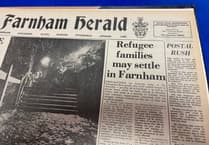 Peeps into the Past: When Farnham welcomed refugees of war
 Dream of a white Christmas denied in Surrey and Hampshire
 Rise in hospital admissions for stress and anxiety in east Berkshire, north east Hampshire, Farnham and Surrey Heath
 Peeps into the Past: Castaway Christmas for Tilford's own Robinson Crusoe