
BATTLE resumed this week at the public inquiry into the A3 Hindhead tunnel scheme with the principal objectors, STOAT (Save The Old A Three) taking centre stage.
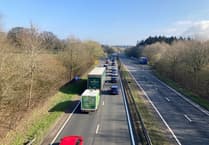
The campaign group is fighting to keep the "old A3" open to enable local traffic to access and exit the new A3 via two slip-lane junctions so that local traffic patterns can return to pre "rat-running" days.
The opening day of STOAT's week-long sitting was dominated by the implications of traffic on surrounding wildlife if the old A3 remained open.
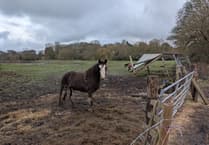
An ecology expert and witness for the Highways Agency, Matthew Fasham, argued that traffic noise levels occasioned by preserving the old A3 would have an adverse effect on breeding levels of local wildlife such as woodlarks, nightjars and Dartford warblers living in the Devil's Punch Bowl.

The argument was based on the findings of a research study, the Reijnen Model, carried out by Dutch ecologists .
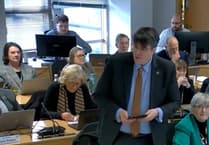
But intense interrogation from the barrister acting on behalf of STOAT, Michael McParland, strongly refuted the validity of this research. He argued that the theory behind the model was not applicable to the A3 at Hindhead and had not been tested.
He further accused the Highways Agency of being more concerned with wildlife than the concerns of local people, who would be severely inconvenienced should the road close.
"The critical positive you have for closing the A3 is that breeds of birds will rise, but there is no actual evidence to support this. It is simply your 'logical conclusion', said Mr McParland.
"The fact remains that bodies such as English Nature termed (the Reijnen Model) a preliminary study and felt that further research was needed to verify it.
"They further state that noise is only a possible cause and that to apply this model universally, you would have to be extremely cautious."
But Mr Fasham maintained that the Highways Agency's argument made sense.
"This is not a leap of faith, but a leap of logic and a perfectly reasonable one to take.
"The Reijnen is the principal model used when examining the impact of road traffic on birds. It is simply accepted that roads do have an adverse impact on wildlife."
Mr Fasham further claimed that keeping the road open would present the main ecological problem to surrounding wildlife and form a major barrier to the movement and dispersal of wildlife, including bats, birds, reptiles and badgers.
He questioned the validity of a road-kill survey carried out by STOAT, which concluded that no dead bodies of animals had been seen on the existing A3 across the common, which members had monitored throughout the year.
"I'm not entirely happy with this at all," said Mr Fasham.
"I'm sure the survey was conducted by people in cars where it would be easy not to notice some of the smaller animals lying at the roadside."
But once again, Mr MacParland cited a lack of evidence from the Highways Agency that could substantiate claims that many animals were being killed trying to cross the road.
The inquiry continues.