
THE CASE TO REMAIN:
IT began in 1950 with the creation of the European Coal and Steel Community, which was rooted in the determination to prevent war between France and Germany and build a peaceful, prosperous future for Europe.
These two objectives - peace and prosperity - have been achieved. The EU now has the world’s largest economy and no two member states have ever gone to war.
So successful is the project that since 1973 a further 19 countries have followed Britain and joined us in building a community of 28 countries. Freedom and democracy have been brought to 14 countries which were formerly military dictatorships or totalitarian regimes - Spain, Portugal, Greece, Poland, Lithuania, Latvia, Estonia, the Czech Republic, Slovakia, Slovenia, Croatia, Hungary, Romania and Bulgaria. Some, like Poland, are already among our fastest-growing markets.

Northern Ireland received €2.4billion of EU aid to implement the Good Friday Agreement, which included the cost of dismantling the fences, watch towers and border posts erected during the Troubles, none of which had prevented IRA terrorists from crossing and carrying out terrorist attacks in London, Guildford and Brighton.
Spain had to re-open the border with Gibraltar after 16 years before being allowed to join. Today 10,000 people cross every day and Gibraltar has a new economy based on tourism and financial services.
In Cyprus the EU helped to make peace after the war between NATO allies Greece and Turkey - a war NATO itself could not stop.
Iran was brought to the table to sign the recent nuclear-weapons deal as a result of EU sanctions.
Nobody can deny that the EU has been a major force for peace in Europe.
Today the EU is the world’s largest economy and we are among more than 500 million people enjoying one of the world’s highest standards of living.
To achieve this, the EU has swept away 28 different sets of national regulations, restrictive practices and state subsidies. Flights are 40 per cent cheaper as low-cost carriers have replaced state airlines. The higher prices of right-hand drive cars were ruled illegal by the European Court of Justice, saving us up to 30 per cent as a result. Mobile-phone and data-roaming costs have been slashed by 70 per cent and 95 per cent.
EU-supported initiatives, such as Airbus, have created world-beating industries.
EU-funded research-and-development projects keep Europe at the forefront of high-tech industries and 28 per cent of that money comes to the UK. Our universities, aerospace and motor industries are major beneficiaries.
The EU has invested in new roads and transport infrastructure, including £1.5bn of loan funding for Crossrail. The creation of the Eurozone and Schengen areas has dramatically reduced the costs of doing business across the EU.
Britain had difficulties adjusting in the late 1970s and early 1980s but now, after 43 years of EU membership, we have the world’s fifth-largest economy, a record number of people in work and low unemployment. We are ranked in the world’s top five most competitive countries and top 10 best places to do business.
The EU’s current five-year strategic plan will result in another extra five per cent in EU GDP growth when implemented in full.
The main projects - completion of the single markets in financial and digital services, a new aviation strategy and new international trade deals - are all top priorities for the UK Government.
Britain used to be known as “the dirty man of Europe”. Today, the air we breathe, our rivers, lakes and beaches are all much cleaner. Only EU-enforcement action made the British Government take action.
Sulphur dioxide from our power stations used to cause acid rain that was killing the forests of Europe. Now cut by 90 per cent, the forests are regenerating.
Our beaches were infamous – raw sewage used to be a common sight. Now more than 600 fly the Blue Flag.
EU membership helps Britain fight the threats posed by international crime and terrorism and meet the challenges of mass migration from Africa and Asia.
It will also enable us to tackle the tax avoidance and abuse of power by global businesses and the very rich.
As European citizens we have rights, freedoms and protections. As workers, shoppers and travellers, we are better off because we are European as well as British citizens.
At home we have employment rights and consumer protections guaranteed. On the Continent we have the freedom to live, work, study, own property and the right to free healthcare and legal advice.
Today Britain is the world’s greatest “soft power”. We sit at all the top tables of the world’s most important organisations. We have a unique network of allies in NATO, the Commonwealth and a permanent seat on the UN Security Council.
All our friends and allies and the heads of key international organizations – such NATO, the IMF and WTO – say they want a strong Britain in a strong European Union. Should we ignore them? No head of state nor leader of an important international organisation has come out in favour of Brexit.
Today, Britain is prosperous, peaceful and admired and respected around the world. We are in an ideal position - we are one of the big three in the European Union, able to lead and influence all its decisions. But we are not in the Eurozone nor the Schengen Area. We have the pound and control of our borders and receive a large rebate on the cost of our membership.
Today Britain is stronger, safer and better off in Europe than we can be on our own. No country has a better deal. We ask: “Why change?”. We say: “Europe is great for Britain.” We urge readers to support our campaign to remain a member of the European Union.
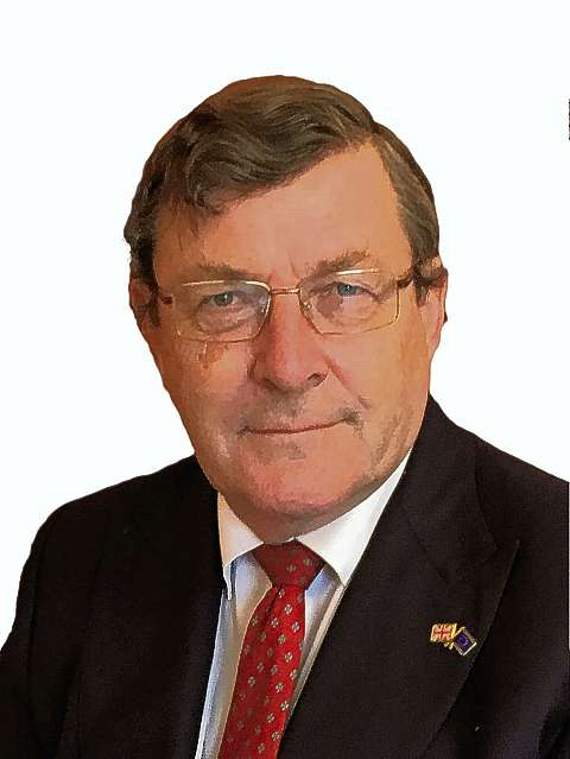
Tony Pryor
European Movement Hampshire
Comments
This article has no comments yet. Be the first to leave a comment.