
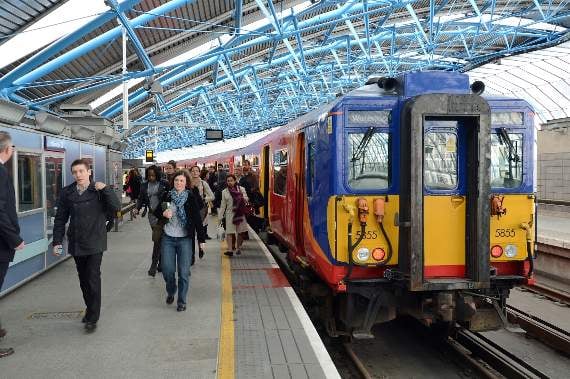
THE RMT rail union has scalated its dispute with South Western Railway (SWR) over the final weekend of the summer holidays, with a three-day strike set to go ahead.
Strike action began today (Friday) and runs until 11.59pm on Sunday, September 2, as part of the long-running dispute over the role of guards.
Passengers hoping to travel to Southampton for the England v India Test Match and Bournemouth for the seaside town’s International Air Festival will face delays.
SWR predicted only two-thirds of trains would run on Friday, meaning 560 cancellations.


.png?width=209&height=140&crop=209:145,smart&quality=75)
Only half its scheduled 1,500 trains on Saturday will operate, resulting in 750 cancellations.
And on Sunday – the quietest day of the week – around half of the 1,200 trains timetabled will not run.
The 72-hour walkout means the majority of routes across the network will face a reduced service over all three days.
This includes the Alton to Waterloo line via Farnham, where SWR has confirmed a reduced service will be in operation on Friday, with one train per hour running in each direction.
Confirming the strike action, the RMT accused South Western Railway of “refusing to engage in a serious talks process that could reach an agreement”, criticising the company’s “cavalier and contemptuous approach”.
An SWR spokesman responded: “As the RMT persists with this unnecessary action on the final weekend of the summer holidays, we are working hard to keep customers moving and minimise disruption as much as possible.”
The latest industrial action comes just a week after commuters faced the prospect of another big jump in fares and season-ticket prices.
Fares are set to increase by up to 3.2 per cent in January, with the £4,112 cost of an annual standard season ticket from Haslemere to London – £5,040 from Liphook –set to rise by around £130.
The rise is determined by RPI (Retail Price Index), and rail users argue, it continues the trend of fare hikes far outstripping average wage rises.
Transport Secretary Chris Grayling has called for future rail fare and wage increases to be based on the lower Consumer Prices Index (CPI), rather than the higher RPI.
But the RMT union has accused him of trying to impose a “pay cap” on its members.
The Government’s preferred measure of inflation, the CPI, rose to 2.5 per cent in July from 2.4 per cent in June.
Mr Grayling said: “I support paying rail staff decent wages for the hard work they do, but I also now believe it is important that pay agreements also use CPI and not RPI in future.”
He urged the rail companies’ membership body the Rail Delivery Group to help the government move towards using CPI for future pay deals, in a letter sent to all the rail unions, with a separate letter sent to Paul Plummer, the chief executive of the Rail Delivery Group, asking for his support.
The TUC union earlier calculated rail fares had risen over twice as fast as wages over the past decade.
RMT head Mick Cash said in response: “If Chris Grayling seriously thinks that front-line rail workers are going to pay the price for his gross incompetence and the greed of the private train companies he’s got another think coming.
“RMT will fight any attempt to impose a pay cap on our members in a drive to protect private train company profits.”
The cost of most train fares are set by train companies themselves, but 40 per cent of fares in England, Scotland and Wales are regulated, so that they are only allowed to rise by an amount pegged to the RPI rate of inflation in July the previous year - currently 3.2 per cent.
These regulated fares include annual season tickets.
Comments
This article has no comments yet. Be the first to leave a comment.