
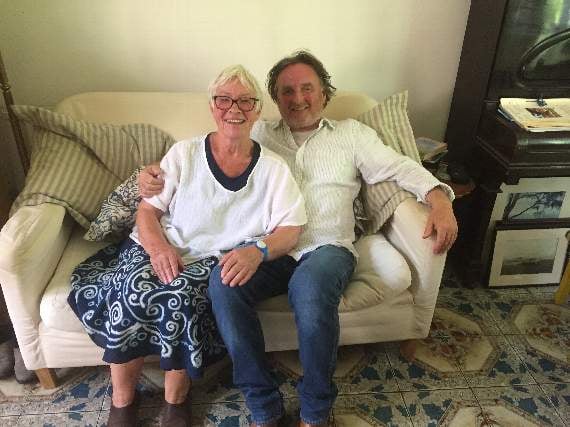
A COUPLE undergoing a £5 million ground-breaking technology trial for dementia are already seeing the benefits of the technology, as they become more aware of their health and what steps they can take to stay well.
The study, TIHM for dementia, helps clinicians to remotely monitor the health and well-being of people with dementia so they can intervene earlier to help someone avoid a crisis and unnecessary hospital stay.
Currently 200 people consented to participate in the study, led by Surrey and Borders Partnership NHS Foundation Trust and funded by the Department of Health.
Farnham residents Phil and June Bell are part of the Trusted User Group, which is made up of people with dementia and their carers from across Surrey and North East Hampshire, who have been trialling the technology for the TIHM (Technology Integrated Health Management) for dementia study.



June suffers from lewy bodies dementia. The pair have had their home kitted out with non-invasive devices, including sensors that monitor movement around the home and which detect if June has left the home.
Other devices such as a falls monitor is worn by June, and there is a tracker ‘pebble’ that can be easily placed in clothing that monitors a person’s movements when they leave the home.
Phil said: “We carry the pebble on us all of the time, or if June goes out with her friends she takes it with her and if she goes into an attack, they can press SOS and then they know where June is and can send an ambulance.
“If I go down the shops, I can leave June on her own, which I wouldn’t previously have been able to do because she should be with someone all of the time - mainly because of her spacial awareness.”
Other interactive devices, such as a blood pressure cuff, oximeter, thermometer and weight and hydration scales, are also included in the trial.
“What is unique about this study, is that using the ‘internet, all of the devices are able to work together to provide us with a holistic picture of someone’s health and well-being at any one point in time,” said Amanda Morgan, communications officer, at Surrey and Borders Partnership NHS Foundation Trust.
“So as well as being able to alert us to an immediate crisis such as a fall, the technology can also help us to pick up on health issues before they become an emergency, helping people to stay out of hospital and be treated in their home.”
Any alerts trigged by the technology are followed up by the team’s clinicians based at their Clinical Monitoring Unit at their Abraham Cowley Unit in Chertsey.
These clinicians decide how an alert should be followed up. This may simply involve a call to the carer to suggest they make an appointment to see a GP, or a clinic appointment may be arranged, or an Alzheimer’s Society dementia navigator may be asked to visit.
People keen to find out more about the trial and register an interest, should go to: www.sabp.nhs.uk/tihm.
Comments
This article has no comments yet. Be the first to leave a comment.