
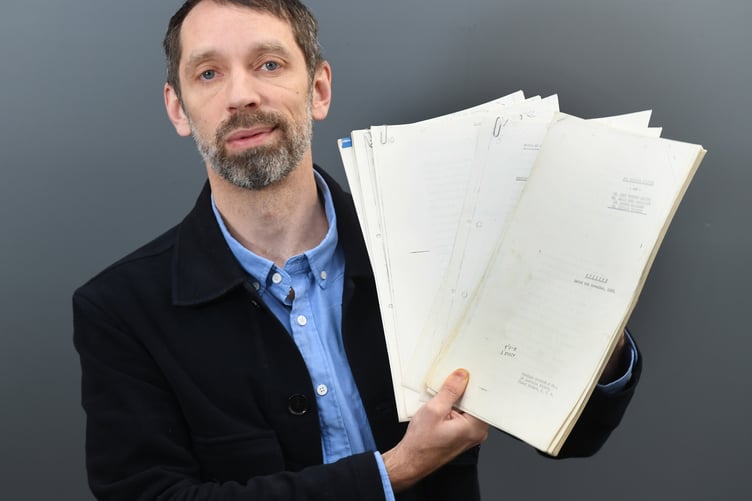
A cache of more than 300 pages of legal documents charting the bitter break-up of The Beatles is to go under the hammer later this month.
The archive, detailing the 1970-71 High Court battle that saw Paul McCartney sue his bandmates, will be offered by Ewbank’s in Send, near Woking, on Thursday, February 26, alongside two rare awards presented to the band at pivotal moments in their career.
Originally compiled by The Beatles’ advisers and legal representatives, the documents relate to the London High Court case in which McCartney sought to dissolve the group’s business partnership.
At the heart of the dispute was the appointment of Allen Klein as manager following the death of Brian Epstein in 1967.




McCartney strongly opposed Klein’s appointment, citing concerns over financial management. He hired his own accountants who, with legal representatives, began uncovering what was described as confusion and a lack of accountability within the group’s affairs.
Years later, John Lennon, George Harrison and Ringo Starr agreed he had been right.
The portfolio includes courtroom records, minutes of meetings between lawyers and financial advisers, and detailed references to the many factors behind the band’s collapse, including the Klein dispute. McCartney sought not only to remove Klein but also to sue his fellow members and Apple Corps.
Among the papers is a nine-page copy of the original 1967 Deed of Partnership between The Beatles Limited of 23 Albemarle Street, London, complete with facsimile signatures of all 4 members. A later document notes it was the first written instrument of partnership between them.
Copies of writs were issued to John Ono Lennon, sued as John Winston Lennon, George Harrison, Richard Starkey and Apple Corps. Minutes taken by advisers reveal the complex and often chaotic state of the band’s business dealings.
A meeting of ABKCO Industries Inc. at Savile Row on April 22, 1971, was described as tense and heated. Discussions reportedly included suggestions that George Harrison sell his interest in Apple and that McCartney be expelled from the partnership. Notes record: “Between 3 and 4pm. The three Beatles, Howard and Klein returned to Savile Row … They were very depressed …”
A draft order dated January 26, 1971, required Klein to provide a chronological account of his introduction to the band in early 1969 and a full record of all sums received by ABKCO or himself relating to The Beatles, as well as an explanation of how McCartney had benefitted from his involvement.
The documents also reveal that no written agreement was recorded when Pete Best left the group and Ringo Starr joined. Other issues under scrutiny included tax liabilities demanded by the Inland Revenue, royalty arrangements for film and music rights, and disputes over film clips for Hey Jude, Revolution and Magical Mystery Tour.
Ringo Starr’s temporary departure during sessions for the The Beatles — commonly known as The White Album — is also referenced, as are McCartney’s disagreements surrounding the release of the Let It Be film and album.
Lawyers’ notes capture the complexity of the arrangements and raise the blunt question: “Where is the money?”
Auctioneer Andrew Ewbank said: “This is an extraordinary record of the greatest rock and pop band ever.
“It is particularly important in two ways: in recording the fall-out that was commonplace in the early days of modern music when musicians were naïve about business and often exploited by those who managed them; and in providing a highly reliable detailed source of the dynamics within The Beatles and what drove them. As such, these are vital historical documents.”
Consigned by descent from the vendor, whose late brother acquired the papers while working in London during the 1970s, the archive is offered as a single lot with an estimate of £3,000-5,000.
Two awards presented to The Beatles will also feature in the sale.
The first recognises their 1966 hit Paperback Writer, released on the Parlophone label on June 10 that year. Presented by British music paper Disc, later Disc and Music Echo, the silver-coloured metal disc resembles a 7-inch single and bears the inscription: “Awarded To The Beatles for their Parlophone recording of Paperback Writer.” It is estimated at £7,000-10,000.
Also offered is an RIAA Award marking more than $1 million in sales of the album Meet the Beatles!, the group’s first release on Capitol Records in the United States. The album spent 11 consecutive weeks at No.1 and cemented their American breakthrough following their appearance on The Ed Sullivan Show.
The award features a gold disc, catalogue number ST-2047, a miniature image of the album cover and a plaque commemorating the milestone. It carries hopes of £8,000-12,000.
Live online bidding for the Music Memorabilia auction on February 26 is available via the Ewbank’s website.
Comments
We've recently changed our login process. If you have an account for commenting, you will need to re-register on the login window.
This article has no comments yet. Be the first to leave a comment.