

The calling card Labour left behind at the end of its last government – that infamous note in Downing Street – became symbolic of a party that had lost control of the public finances.
By contrast, the handover from the Conservatives painted a very different picture: the fastest-growing economy in the G7, debt lower than many comparable economies, inflation back under control and unemployment historically low.
That was what Labour inherited. It is remarkable how much that has changed in under two years.
Business confidence has collapsed, unemployment is spiking and borrowing costs are climbing.
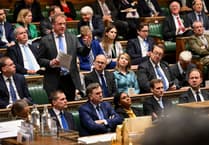
Worse still for the Government, growing unrest on Labour’s own benches is now feeding uncertainty in the markets.
The problem is now twofold. First, Britain needs a serious plan to restore growth, improve productivity and get more people back into work. There is little evidence this Government has one.
Second, and more fundamentally, Labour’s political instincts remain deeply hostile to the conditions that create economic confidence: enterprise, investment and fiscal discipline. Changing the prime minister would not change that underlying problem.
Warnings are now flashing across the economy. Government borrowing costs – one of the clearest indicators of market confidence – have risen sharply in recent months, breaking two previous records set under the last Labour government.
Debt interest cost more than £110 billion last year, roughly 8 percent of government spending, nearly double pre-pandemic levels.Labour is not simply borrowing more; it risks making borrowing more expensive too.
What is revealing, however, is the response from sections of Labour’s own party. One backbench MP dismissed market concerns by insisting “the markets will have to fall in line”.
That mindset will alarm anyone who understands how economies function. Governments do not command confidence by demanding it. Investment flows to countries that demonstrate stability, credibility and a respect for wealth creation. Yet Labour continues to behave as though growth can simply be taxed into existence.
Even the IMF has now signalled that Britain is reaching the limits of how much revenue can realistically be extracted from the current tax base without wider structural reform.
Its carefully worded call for “expenditure restraint” was diplomatic shorthand for a much harsher reality: Britain cannot spend indefinitely without consequences.
But restraint will be difficult for this Government. Welfare costs continue to rise. Debt servicing is becoming more expensive. Repeated doctors’ strikes. Expensive state interventions, from rail nationalisation to industrial subsidies, are placing further pressure on the public finances, while the cost of reforms to local government and healthcare continue to grow. This is the central danger of a government that mistakes public spending for economic strategy.
Britain does not face an unavoidable economic crisis. But it does face a political one: a governing party unwilling to accept that sustainable growth comes not from ever-higher taxation and borrowing, but from creating the conditions in which businesses invest, employers hire and confidence returns.Ignore those realities for long enough, and the markets, and eventually the public, will respond accordingly.
Comments
We've recently changed our login process. If you have an account for commenting, you will need to re-register on the login window.
This article has no comments yet. Be the first to leave a comment.