
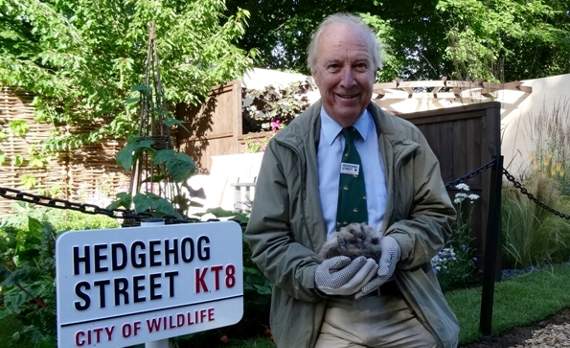
WILDLIFE lovers are being asked to do their part to address the rapidly falling hedgehog population across the country.
Deborah Griffiths, education and engagement assistant from Hampshire and Isle of Wight Wildlife Trust, explained that hedgehogs are now “disappearing from our countryside as fast as tigers are worldwide” – which is “a shocking state of affairs for a species that was once common”.
Many of our common native wildlife - hedgehogs, house sparrows, and starlings, for example – are all in decline because of a variety of reasons, including loss of habitat, she added.
“While hedgehogs are suffering in rural areas, some are taking sanctuary in many of our suburban neighbourhoods,” she said.



“With some 15 million gardens in the UK, covering an area larger than all the UK’s national nature reserves put together, we have a great opportunity right on our doorsteps to help the humble hog.
“Wild About Gardens Week is an annual celebration of garden wildlife. This October we at the Wildlife Trusts are teaming up with the Royal Horticultural Society and the Hedgehog Street campaign for Wild About Gardens Week, an opportunity to raise awareness of the hedgehog’s plight and encourage everyone to look out for hedgehogs in our gardens.”
She outlined some simple steps that anyone can take to help hedgehogs:
* Create hedgehog highways: Hedgehogs need to be able to roam far and wide in search of food, mates and nesting sites – racking up between and two kilometres per night. Get together with your neighbours to cut a 13 centimtre squared hole in your fence or dig a channel beneath garden boundaries to connect your gardens. You can pledge to make a hole in your fence and map it at hedgehogstreet.org.
* Avoid the use of pesticides: Ditch the slug pellets and avoid pesticides. Hedgehogs are natural pest controllers and need a plentiful and varied supply of invertebrate prey to stay healthy.
* Provide nesting sites: Log and leaf piles, wilderness areas and purpose-built hedgehog homes make great places for hedgehogs to nest and hibernate. Fallen leaves also make the perfect nesting material, so make sure you don’t clear all of these away. You can even try and make your own hedgehog house with nothing more than a cardboard box, newspapers, grass and a carrier bag. General wildlife-friendly gardening tips, like using mulch and compost, allowing areas to grow wild, and growing bee-friendly flowers also helps.“Hedgehogs might be declining, but with some small steps, even in the smallest of urban green spaces, together we can make sure hedgehogs have a home in our gardens,” she added.
To find out more about hedgehogs and how to make your garden a little wilder, visit wildaboutgardens.org.uk or hedgehogstreet.org.
Comments
This article has no comments yet. Be the first to leave a comment.