
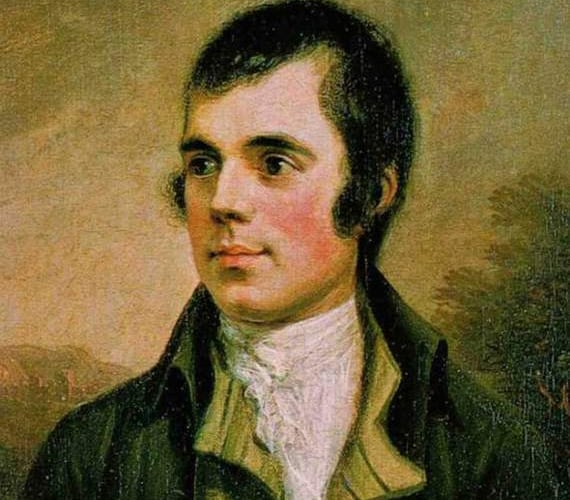
WHEN the Scottish Altonians take to the floor in the first reel at their annual Burns’ Supper tomorrow they will be joined, allowing for time difference, by a worldwide following of revellers – even in North Korea – celebrating the famous Scottish poet’s birth.
Luath Grant-Ferguson, who is on the Alton supper’s organising committee, described the tradition of Burns Night as “massive” and celebrated in every corner of the globe.
“Although not necessarily in quite the same way as they might have different things on the menu from our haggis and neeps and tatties (swede and potatoes),” he said.
The event also raises funds for local charities and this year’s recipient will be Bushy Leaze Children and Families Centre in Alton.
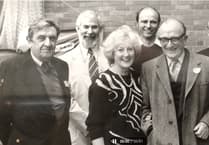



It will be the 25th Alton Burns Night celebration, and this year it is being overseen by Alton Burns Supper committee chairman Alison Tubman, whose husband John will be playing the accordion for the Scottish dancing, with Toni Goffe playing bass and Luath on drums.
To celebrate the occasion, “superb” cook Jill Worth is planning a special traditional meal with, of course, the main feature being the haggis, which will be addressed in solemn fashion.
For the past 21 years, the supper has been held at Eggar’s School and the hall will be decorated with tables bearing 100 candles, set for an evening of dining and dancing in celebration of Robert Burns.
For a man who died early at 37, Burns wrote some of the world’s finest and most poignant poems, inspired by his observations of the people and places where he lived or his own, tangled romantic life.
The include the perils facing a timid harvest mouse, the ghostly and scary Tam O’Shanter, capturing his love for one woman in the lovely My Love is Like a Red Red Rose and, of course, a song that is sung around the world, Auld Lang Syne.
He was called the “ploughman poet” as he was born in a farm labourer’s cottage in Alloway, Dumfries, in 1759, where one half of the family home was used as a cow shed.
His father, who worked the land, was a strict man of God and Robert was often disciplined for his “wild ways”. And little changed when, as a young man, he developed a fondness for drink and an even greater fondness for the ladies.
By the time Burns’ first illegitimate child, Elizabeth “Bess” Burns (1785-1817) was born to Elizabeth Paton on May 22, 1785, he and a lady called Jean Armour were in a relationship, and by the end of the year she was pregnant with his child.
She was to give birth to two sets of twins before they were married and Jean’s father only allowed the wedding because of Burns’ growing status as a poet.
They eventually settled in Dumfries and Burns continued to write while working on his farm, and eventually his work was to gain him celebrity status. He was often invited to Edinburgh to read his poems to his growing admirers.
Although by now a published poet, and still with an eye for the lassies – he fathered at least four illegitimate children during his lifetime – Burns took a job as an excise man, watching for smugglers and checking on the quantities of alcohol being delivered to local inns, but there was never enough money and work, writing and his social life took a toll on his health.
He had a weak heart as a result of having had rheumatic fever and it is thought this hastened his death. Only days after taking the waters and being plunged into the freezing waters of the Solway Firth, he died at his home in Dumfries on July 21, 1796.
Burns was given a full military funeral through the streets of Dumfries and a gun salute over his grave, leaving as his legacy a volume of work that would make him Scotland’s greatest poet. Jean, his often-neglected wife who struggling to feed her family, was unable to attend his funeral as she was in labour with her ninth child.
Her struggle with poverty attracted national attention and a charitable fund was set up for her and the children.
She outlived her husband by 38 years and lived to see his name become celebrated throughout the world.
* For tickets to Alton’s Burns Night celebrations, call 01420 82630.
Comments
This article has no comments yet. Be the first to leave a comment.