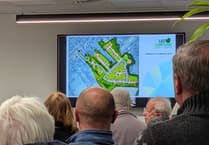
Passfield residents have forced East Hampshire District Council into a climbdown over removing a vital play park, at a meeting held at the childrens' facility last week. Council officials said they were under the mistaken impression that there was a strong feeling among the people of Passfield that they wanted the play area gone. However they conceded that the council had "failed to communicate" with the residents directly, instead relying on a survey by the developer Squires Bridge, who only asked the residents of the the 14 houses in the Lyndons, rather than conducting their own consultation process. Referring to section 106 of the planning agreement for the Lyndons, Nikki Young asked the council representatives why officials failed to ask all the people of Passfield if they wanted to keep the play park. Miss Young said: "I would like to ask the council why they failed to nominate a successor to own and maintain the open space which includes the play area, within the first year of the development's completion. "Something has gone wrong with the nomination process: it hasn't been acted upon. This matter has been brushed under the carpet. It is Council policy not to adopt more play areas. They do not wish to take on this one because they want to adopt the Lyndons without the responsibility or cost of insuring and maintaining the play area." Campaign co-ordinator and mother of two, Miss Young was concerned that the council may force residents to take on the facility and she made it clear that responsibility for the park rested with the council. Miss Young handed Mr Turner a petition by more than 120 residents and supporters and asked the council, given the support the play park now has, to tell the residents how they plan to resolve this problem. Streetcare and operations manager Brian Turner said: "This park was definitely provided for the whole of Passfield. We do concede that we failed to communicate to all the residents of Passfield, particularly all those strictly affected by the play park. "At the time of agreeing the section 106 the council was going through a change of policy on what to adopt. It was decided only to adopt 'strategically important assets' and this did not fit the criteria for adoption. A standard planning document and timescale was drawn up for adopting the play area and open space" Lyndons representative Arthur Woodhouse told the meeting that the new residents were given a stark choice by Squires Bridge, either take on the play park or have it removed, because the council was unwilling to adopt the road with the question of ownership of the park unresolved. The decision to have it removed was unanimous but, in a letter to Diane Mathieson, the residents of the Lyndons told the council that it would be "an act of vandalism" to remove the park and surrounding greenery. Mr Arthurs said: "We sent the letter to Ms Mathieson to explain why we could not take on the park and asked her not to take it away, but the letter we got back says the decision has already been made." Mr Turner explained that the council may have been in error to assume the park was not a strategically important asset and we need to go back and ask the council to define the term 'strategic'. He agreed to send out a consultation document to all Passfield postcoded addresses to ask them the straight question 'do you want to keep the play park, yes or no?'. Concerns were raised by residents about what the pass mark would be and what would happen if there was a low response, but Mr Turner felt that he did not have the authority to make that decision, it would be the council who decided based on the response of the consultation. Some residents felt that, given the size of Passfield, a petition with 120 signatures should be enough to secure that park and that a consultation process would be costly.