
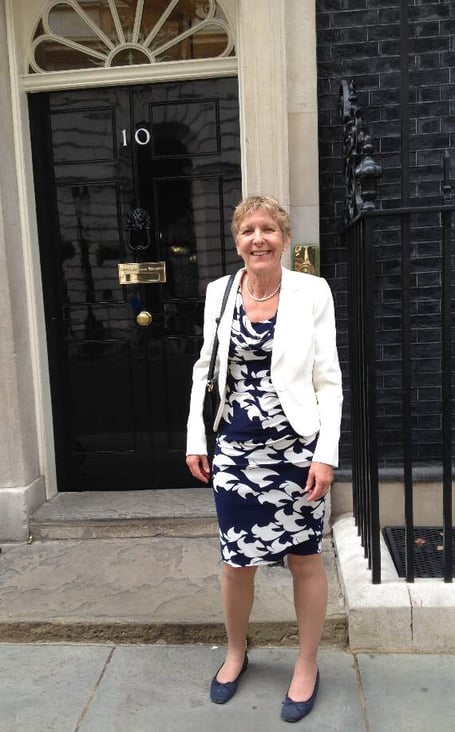
A VILLAGE doctor and a lay representative from Hampshire have been elected to the board of the NHS’ national commissioning body.
Liphook GP Dr Barbara Rushton was voted onto the board of NHS Clinical Commissioners (NHSCC) – the independent organisation representing clinical commissioning groups (CCGs) in England, while Susanne Hasselmann was re-elected to her post as a board member and chairman of the national CCG Lay Member Network.
Dr Rushton (pictured above) clinical chairman of NHS South Eastern Hampshire Clinical Commissioning Group (SEH CCG), said she was “honoured, flattered and excited” to be voted onto the independent member-led organisation.
She said: “I’m thrilled to join NHSCC and equally delighted Susanne has been re-elected in her lay role.
“It is terrific that there are two of us from the Hampshire CCGs Partnership on a 24-strong national body and it will give us the chance to ensure there is a very strong voice for our region.
“As a GP partner in a training practice, I recognise the difficulty in GP recruitment and retention and the need to improve primary care resilience.
“I am passionate about making primary care sustainable and would love to play a part in achieving this across the South East. Our role is to provide CCGs with a strong collective voice and represent them in the national debate on the future of healthcare, so there is plenty to talk about.
“We also facilitate shared learning and deliver networking opportunities for our members so clinicians can commission the best possible services for their patients and populations.”
Dr Rushton has chaired the SEHCCG since its formation. One of the pilot areas works with NHS England to advise on the multi-specialty community provider contract, and she represents an area at the heart of developing new models of care.
It recently helped establish the Hampshire CCG Partnership with three other CCGs – Fareham and Gosport, North East Hampshire and Farnham and North Hampshire, sharing a chief officer and covering a population of 850,000.
Dr Rushton has been a GP partner at Liphook and Liss Surgery for 29 years.
She is also a GP trainer, with a particular interest in woman’s health and paediatrics, and has served as deputy chairman of the Hampshire Health and Wellbeing Board. She is also one of the two NHS board representatives for South East England.
The board of NHSCC is made up of 14 clinicians and 10 managers and ordinary lay people. All are elected by the membership of the NHSCC.
Both Dr Rushton and Ms Hasselmann are part of the newly-formed Hampshire CCGs Partnership and members of the newly formed board, made up of four CCGs covering parts of Hampshire and Surrey, which since April 1, has accelerated improvements in patient care and reduced duplication across a large geographical area.
Ms Hasselmann said: “I am delighted to have been re-elected to the board. My role will help to strengthen the new Hampshire CCGs Partnership and I will work hard to ensure lay members continue to be involved in decision-making to ensure there is a challenge on behalf of patients, the public and the tax payer.
“I very much look forward to continuing on the NHS Clinical Commissioners Board and sharing its benefits across the whole of the partnership.”
CCGs were created following the Health and Social Care Act in 2012, and replaced Primary Care Trusts in April 2013. They are clinically led statutory NHS bodies responsible for the planning and commissioning of health care services for their local area.
There are now 207 CCGs in England. Commissioning is about getting the best possible health outcomes for its residents. This involves assessing local needs, deciding priorities and strategies, and then buying services on behalf of the population from providers such as hospitals, clinics and community health bodies.
It is an ongoing process and CCGs must constantly respond and adapt to changing local circumstances.
They are responsible for the health of their entire population, and measured by how much they improve outcomes. CCGs are:–
nMembership bodies, with local GP practices as the members
nLed by an elected governing body made up of GPs, other clinicians including a nurse and a secondary care consultant, and lay members
They are responsible for:
• Approximately two-thirds of NHS England’s total budget of £73.6 billion in 2017/18
commissioning healthcare including mental health services, urgent and emergency care, elective hospital services, and community care
• Independent, and accountable to the Secretary of State for Health through NHS England
• The health of populations ranging from under 100,000 to 900,000, although average population is about 250,000.
As local authorities are responsible for public health, CCGs work closely with them through health and wellbeing boards. They work together to achieve the best possible outcomes for the local community by developing a joint needs assessment and strategy for improving public health.
Clinically-led commissioning has already proved to be a strong force for change, the NHS claims, driving real improvements in services and outcomes for patients.
Comments
This article has no comments yet. Be the first to leave a comment.