
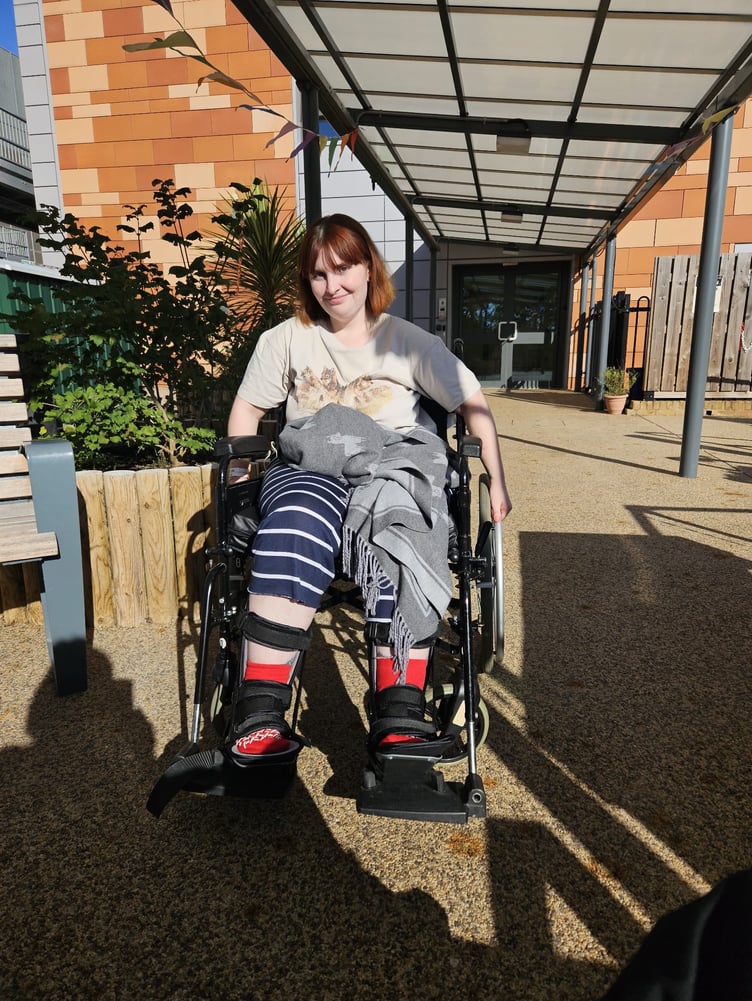
The best way I can describe my experience of having Guillain-Barré syndrome (GBS) is Alice falling down the rabbit hole to Wonderland. It felt like there was no end in sight, and I kept thinking: "When will it end?..."
It started with a backache in late August 2025. I had done a workout the day before and thought I had overdone it. The next day, I was visiting Petworth House in West Sussex and walked through the massive 700-acre deer park. The walk felt harder than it should have. My calves were tight, but it was a warm day and I put it down to that.
Over the next week, I noticed small changes. It took me longer to do the 10-minute walk to the bus stop for work and back again. Every step felt like lifting a heavy weight, and I was scuffing my shoes.
By Friday, it took me more than 20 minutes to walk home. I collapsed on the couch and couldn't stop crying — something was seriously wrong.
‘My body was shutting down’
After a rapid decline, where I was doing the stairs sitting down and needed help getting up, I went to the Urgent Treatment Centre. The staff thought I had tendonitis or tendinopathy and sent me home on crutches and painkillers, reassured that I had a physiotherapy appointment in a few days. That physiotherapist sent me straight to A&E.
He wrote a letter so I would be taken seriously and, after hours of waiting, I was seen and admitted. The letter stated that GBS should be considered, but this wasn't tested straight away.
I would be in hospital for 197 days.
I was terrified. I didn't know what was happening, and a doctor told me they would be doing an MRI scan to test for Cauda Equina Syndrome (CES). If confirmed, they would consult Southampton Hospital about surgery.
‘Will I see my fiancée again?’

"I'm going to die! Will Mum make it in time to say goodbye? When will be the last time I see my fiancée's face?" These were just some of the thoughts racing through my mind - and they wouldn't be the last.
The MRI scan was negative, but I remained a mystery. I spent a long time on the orthopaedics ward, with physiotherapists watching my legs improve and then worsen again, before I was finally flagged as a neurological case and moved to another ward.
There, weeks overdue, I had a lumbar puncture to test for GBS.
It was excruciating, one of the most painful experiences of my life. Two doctors couldn't get what they needed, and a more experienced doctor was brought in. She completed it in 10 minutes.
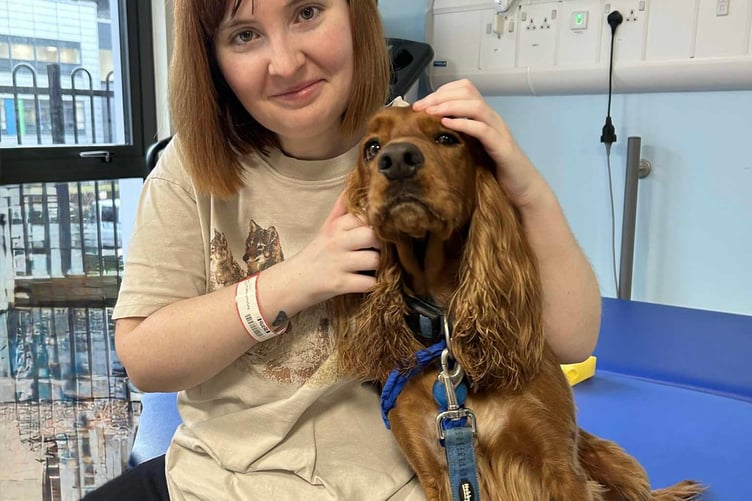
Initial results showed high protein levels, confirming GBS. I was immediately given intravenous immunoglobulin (IVIG) to stop it progressing.
Understanding Guillain-Barré syndrome (GBS)
GBS is a rare autoimmune disorder where the immune system mistakenly attacks the peripheral nerves, usually triggered by an illness or infection. I believe a sickness similar to gastroenteritis in early August was the cause. GBS is typically seen in people over 50, but it can happen to anyone.
Later, I learned I had one of the rarer variants: Acute Motor Axonal Neuropathy (AMAN). According to medical resources, AMAN makes up only 3 to 5 percent of GBS cases in Western countries and is even rarer in people in their 20s.
After five days of IVIG and its unpleasant side effects, I underwent a nerve conduction study, continued physiotherapy and was eventually moved to D10 - the Lotus Rehabilitation Centre.
I would remain there until I went home.
The paralysis took hold
At first, D10 wasn't too bad. I shared a room with three lovely ladies, got to know the staff and began working with the physiotherapy team. But soon I reached what was described as the "plateau". The damage was done. I lost the ability to walk, and a few weeks later my hands weakened too, though not as severely as my legs.
The nerves had to regrow, and I learned they only regenerate a millimetre a day. I realised then that I was in this for the long haul.
I had nightmares about dying in hospital, and at times I wanted to die because I couldn't see a future where I got better. Looking back, I'm ashamed I felt that way. It wasn't fair to my loved ones — and in some GBS cases, people do die when paralysis reaches the breathing muscles.
‘I had so much to live for’
I was lucky compared to others, and I wasn't fighting for my life.
Talking to an older woman on the ward who also had GBS - and needed a tracheostomy because of her breathing difficulties - became the turning point for me.
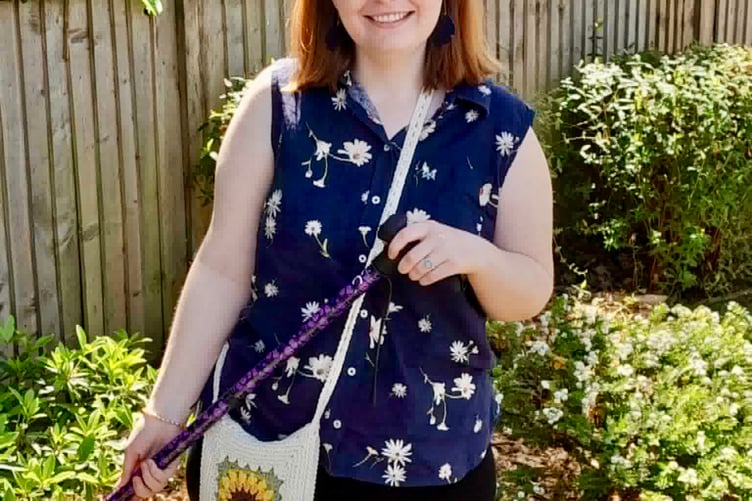
She changed my mindset and reminded me how much I had to live for. I was getting married the following year.
After our conversation, I was determined to get my life back.
I still had dark days where bad thoughts crept in, alongside the pain (regrowing nerves isn't pain-free), and rehab was far from easy. Every patient had a timetable, with weekends as our time off.
‘Even my phone felt too heavy’
I was hoisted if I wanted to get out of bed, use a wheelchair or go to the bathroom. I had to be dressed by staff, and although I still had movement in my hands, I couldn't feed myself or brush my teeth.
Everything that we normally take for granted, I couldn't do - from standing and learning to balance so I wouldn't fall over, to holding my phone, which felt so heavy. I had to learn how to hold a cup properly, and for a long time I asked the hospitality staff to give me drinks in a sippy cup because I couldn't hold a mug without it shaking and spilling everywhere.
My favourite part of the week was hydrotherapy. In the water, I could do things I couldn't do on land, and the staff always made me smile. It was at the pool that I actually did stairs for the first time, and I stunned everyone.
Although I welcomed the weekends when I could spend time with my family, I was eager for the days to go quickly so I could get back to the hard work.
‘Walking again was an emotional experience’
I can't describe the feeling of walking for the first time again - it was emotional beyond words. I had been through hell to reach that moment. As my walking improved over the following weeks, I remember one of the nurses (who I'm still friends with today) watching me and tearing up.
I kept going, and it was thanks to my family and the dedication of the staff on D10. The NHS is far from perfect, and there were ups and downs, but ultimately they got me home.
Once I was home, everything clicked into place, and I began to recover at a rapid pace.
‘I’m a survivor’
Today, I no longer have my wheelchair, and I only need my walking stick occasionally. I'm far from back to normal. I struggle with ongoing fatigue from GBS, and I'm rebuilding my strength - but I'm a survivor.
I'm proud to volunteer with the GBS charity Inflammatory Neuropathies UK, and I'm doing my best to live life to the fullest.
I wanted to share my story to raise awareness of GBS, as it remains relatively unknown, and I hope that one day far more people will recognise and understand it.
*Michelle Monaghan is a former reporter for the Herald and Post, who lives in Clanfield.
Comments
We've recently changed our login process. If you have an account for commenting, you will need to re-register on the login window.
This article has no comments yet. Be the first to leave a comment.