
THIS month marks the anniversary of William Cobbett’s birth on March 9, 1763 – in what is now the William Cobbett pub in Farnham.
From this humble beginning, Cobbett’s achievements in life were remarkable. He wrote Rural Rides about his travels on horseback, recording the plight of the rural poor when society was being transformed by the industrial revolution.
He also wrote a hugely-influential Political Register every week for 30 years, speaking on behalf of the working man – challenging the establishment and inevitably testing the freedom of the press, with three court cases (after one of which he was jailed).
He founded Hansard, wrote English Grammar and French Grammar and books on gardening, farming, the Protestant church and the economy (‘paper money’).


Such was the importance of his life that his funeral at St Andrew’s Church in Farnham in 1835 was attended by 8,000 mourners.
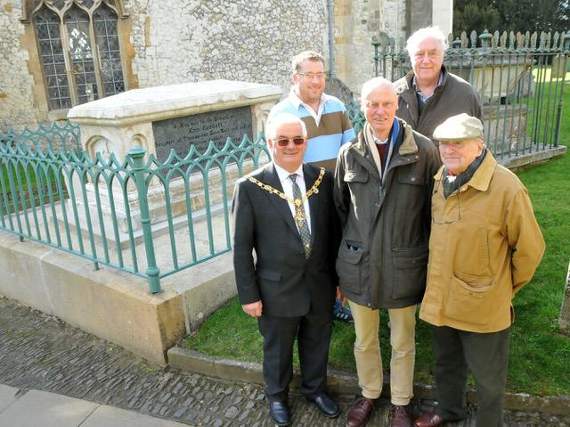
Unhappy with the previous state of his tombstone, the William Cobbett Society initiated its cleaning, supported by a generous grant from Farnham Town Council.
Now, clean and readable, it is a more worthy stop for residents and visitors exploring Farnham’s heritage.
Further improvements in coming months are planned for visitors and residents interested in Cobbett.
Farnham Museum is one of 15 across the country featuring in a Heritage Lottery-funded project exploring the history of liberty, protest, rebellion and reform from Magna Carta to the Suffragettes and beyond.
Run by the Royal Holloway College, University of London, the project is working with The Cobbett Society and Farnham Museum to produce videos of Cobbett’s key contribution as a radical journalist in the years leading up to the 1st Reform Act of 1832.
By the end of the summer it is planned these will be available as part of Farnham Museum’s exhibitions.
Comments
This article has no comments yet. Be the first to leave a comment.