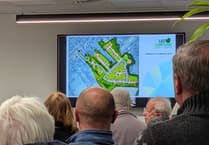
MEMBERS of Whitehill Town Council vowed to protect the interests of residents ahead of the forthcoming major redevelopment of Bordon and White-hill. At the town council meeting, on Monday, councillors were asked to vote for the preferred number of houses to be built in the town following the Army's departure in 2012. But following fresh concerns regarding the wildlife in the town and the density of housing proposed, councillors could not agree on any of the suggestions put forward by East Hampshire District Council. Councillor Zoya Faddy proposed a new option for the number of houses, with added conditions to protect the wildlife of Whitehill and Bordon. The town council's own newly proposed option indicates a preference for 4,000 to 5,000 new homes and asks for further information on the allocation and use of greenfield and brownfield sites in the town. It also stipulates a need for further ecological investigations to be carried out in the area. East Hampshire District Council, which is leading the consultation, has put forward four options. Option one would see 2,000 new homes, but would not attract the facilities or infrastructure the town is currently lacking. In support of option one, councillor Chris Wain said: "If we do choose to support 4,000 to 5,500 homes (the district council's options two and three), there are still no guarantees that we'll get the infrastructure. The only guarantee that we have in that case is that we will lose a significant amount of greenfield sites and we will never get that back." But Ms Faddy said: "People will never forgive us if we get the infrastructure wrong. We have to get this right." As tension mounted at the meeting, fears were allayed by district councillor Ian Dowdle, who said: "It's just too easy, in the absence of hard facts, to get carried away. "But, what we have to remember is that at this stage, we are just looking at the scale of the project. "We are looking at the general size of the development and not at the nitty gritty. "If, for example, it panned out that everyone wanted 4,500 new houses then we - the master planners - would step in and come up with plans. "There will be ongoing consultation and communication between members of the public and district council." Councillor Adam Carew said: "What we are talking about is major regeneration of our town and, although councillors are very keen to see this happen, we are also deeply concerned about the ecological impact of any development on our wildlife and green spaces. "Sixty per cent of Whitehill parish is designated for wildlife and we have two internationally protected areas at either end of the town. "Clearly, the more houses we have the more impact there will be and the greater the loss of greenfield sites. "What happens to Whitehill-Bordon when the Army goes is the most important issue to affect our community in decades. This is a debate we had to have but this is not the end of the process and nothing is set in stone. "What we have proposed is a scaled-down version at the lower end of the Opportunity Executive's (the Opport-unity Executive Group is gathering information on the future of the town from the public to pass to the district council) preferred options, but this is only on the condition that wildlife bodies are happy with development at this level and the facilities and infrastructure coming forward. "The Opportunity Executive needs to be fully aware of local concerns and residents have a right to know how their elected representatives feel about regeneration and its likely impact on our wildlife and green spaces." The public consultation period for the core strategy has now ended. EHDC received 40 responses to the on-line questionnaire, and the results are currently being correlated. A spokesman for the council told the Herald: "The results so far are inconclusive, with people expressing preferences for each of the options." The issues surrounding the future of the town and the options that face it have been further complicated by the recent announcement that Bordon could be made into an eco town. Gaining eco-town status would mean that the town would benefit from Government support and funding, but would see an influx of new homes. Being shortlisted for eco-town status has prompted fears that the town and surrounding area could see up to 8,000 new homes. However, residents have since been assured that the number of new houses would not be more than 5,500.