
EIGHT years ago Patricia O’Conner was a typical 20 year old, living life to the full and enjoying an active, care-free social life.
But soon after a walk with friends through Richmond and Hampton in 2008, the young Farnham woman’s health quickly deteriorated and her life began to unravel.
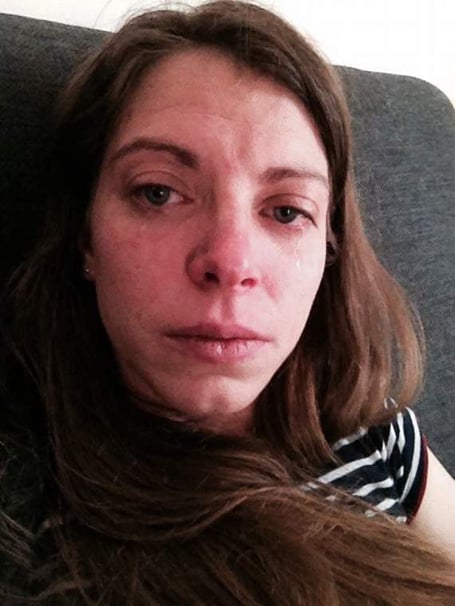
Now 28 years old, Patricia spends most of her days indoors with the curtains closed, suffering severe light and noise sensitivity and near-constant fatigue.
These debilitating symptoms are painfully familiar to thousands of sufferers of the typically tick-borne bacterial infection Lyme disease across the world.




However, despite two positive blood tests from specialist private clinics confirming she has Lyme, the NHS is yet to formally diagnose Patricia with the disease and she has been forced to shell out thousands of pounds on private treatment.
Driven by desperation, she has now added her voice to the growing calls for the NHS to review its approach to Lyme disease and is keen to raise awareness of the debilitating disease.
Patricia said: “There are around 1,000 positive-tested new cases of Lyme disease in England and Wales every year.
“But some experts believe this number could be at least 10 times larger due to Lyme disease being misdiagnosed as conditions including myalgic encephalomyelitis (ME) and multiple sclerosis (MS) and not being a ‘notifiable disease’ in the UK.
“The problem is that once Lyme is in your body and left untreated, it quickly goes systemic and can’t be easily killed by antibiotics. The damage it can do over a long period is very severe and it can be fatal.”
Although unknown to her at the time, Patricia believes she contracted Lyme in 2008 after being bitten by an infected tick while walking through Richmond Park and sitting in the grass outside Hampton Court Palace and by the river banks.
A few days later she developed a bull’s eye rash on her leg and visited her GP who, rather than flag it up as Lyme, as NHS guidelines recommend, diagnosed it as ring worm.
“NHS guidelines state if you have the classic bulls-eye-shaped ‘EM’ rash, as I did, it should be diagnosed clinically as Lyme straight away,” she said.
“But less than half of people who get infected show with a rash and through lack of training, most GPs in Britain don’t know what the rash looks like anyway so they’re unlikely to diagnose you.
“Even if they do, the NHS blood test for Lyme is only 50 per cent accurate so the chances of a positive diagnosis on the NHS is very low.”
Patricia was prescribed various anti-fungal creams to treat the ‘ring worm’ - rather than the antibiotics she urgently needed - but none had any impact and then she began developing flu-like symptoms.
“It was like I had a cold for six or seven months, it was really weird,” she added.
“But my GP reassured me that it was just ring worm and I thought maybe I was pushing myself too hard at work.”
A year later, in early 2009, Patricia’s condition took a dramatic turn for the worse when the still-undiagnosed infection spread to her brain.
She continued: “I woke up one morning and I just felt drunk, like I’d drunk about four litres of vodka. I felt really disorientated and spaced out, really off balance, confused and found it hard to speak.
“I lost my hand eye co-ordination and sense of perception, and then things started getting a lot more serious from then on in.”
Patricia went back to her GP, but again they dismissed her concerns and told her to come back in a month if she felt no better.
“At this point I was getting very tired and quite severely fatigued,” she added. “My legs were getting really heavy, I was getting a lot of disfunction cognitively - reading things was difficult and processing information was becoming near-impossible.
“It started affecting my bladder and heart as well as my brain, and when I started getting incontinent I knew there must be something very wrong with me and it couldn’t just be ring worm.”
After another six months and a lot of cajoling, Patricia’s GPs finally agreed to take a blood test. This came back clear however, and she subsequently embarked on a long list of prescription medication to manage her symptoms and a succession of NHS specialists, who diagnosed conditions ranging from chronic migraine caused by a vestibule disorder to chronic fatigue syndrome - all of which she rejected.
“It felt like I was going to constant doctors’ appointments and trying in vain to get them to recognise that something wasn’t right,” she said. “I was the one guiding them and recommending referrals, not the other way around.
“My life was awful - I was mostly bed and house-bound. I wasn’t living and had quit my job with a medical insurance company because I was too ill. I subsequently lost my flat and the relationship I was in as well.
“This mysterious illness pretty much took everything from me and some days I can’t even recognise myself in the mirror.”
It was not until Patricia had a bad reaction to a hepatitis B vaccination and developed allergies to certain foods, alcohol and hormonal contraception - all symptoms of Lyme disease - that she and her doctors began to think her illness could be immune-related.
“A friend suggested Lyme disease to me so I started researching it and realised I had almost every single symptom,” she said.
“It’s not an answer anybody wants because there is no treatment for late stage disseminated Lyme disease, especially when it’s in the brain. But it was bittersweet because I felt if this is what it is then that’s good because I can finally start tackling it.”
Now convinced of her condition, Patricia researched for the best Lyme test worldwide and came across the IGeneX lab in California. Despite resistance from her doctors, she posted her blood to the USA and waited anxiously for the results.
“I sent the blood off in November 2013 and when they came back in mid-December my GP surgery didn’t even call to tell me my results had come in but started to give me an antibiotic called Lymecycline, supposedly to treat my cystic acne.
“Within about a month I started feeling really good - I started to feel like me again and it later turned out my results had been classed as positive for Lyme disease by the Centre of Disease Control in America.”
However, despite the positive test result and her positive reaction to treatment, Patricia’s doctors still refused to diagnose her with Lyme disease, dismissing the results from California as “equivocal to negative” and a few months later, after her course of Lymecycline came to an end, Patricia’s debilitating symptoms returned.
She went through the NHS complaint process, to no avail, and on her own initiative later received another positive test for Lyme from another specialist Lyme clinic, Armin Labs in Germany.
“I’ve now got several foreign labs saying I definitely have Lyme disease but still the NHS is refusing to give me the antibiotics I need. I haven’t been given one pill of antibiotics from the NHS, not a single pill, nothing.”
Patricia is not alone in fighting for better diagnosis and treatment of Lyme disease on the NHS and has thrown her support behind the ‘Fight Lyme Now’ campaign which has addressed her concerns in parliament in recent months.
There is some hope, with the British government’s rare and imported pathogens laboratory at Porton Down near Salisbury currently working with a Lyme specialist from Germany, Dr Armin Schwarzbach of Armin Labs, to create a better NHS test for Lyme.
However, Patricia believes Public Health England has still got to accept that when the disease is not treated early or with too short a course of antibiotics and comes back, it can become chronic and more serious in the long term.
“I don’t live a normal life, I can’t do normal things and this is not the life I imagined for myself,” she continued.
“Before I got ill I had a really good social life. I was out every single day, I was really active, really busy - one of those people who could do a million things all at once. I was care free, I was happy, I didn’t have any limitations, I was quite an extrovert.
“Now I spend most days inside with the curtains closed. I have memory problems and am so sensitive to light and noise that kids coming home from school or a neighbour putting a spoon in the drawer can be absolute agony.
“Day to day living tasks can be a real struggle. I get tired doing the washing up - silly little things like that - and the fatigue can be to the point that I can’t get out of bed.
“There isn’t enough time in the day to take all the medication I need and I’ve got a carer to help me out around the house.
“But if I can get the bulk load of bacteria down low enough with the help of long-term treatments, then my immune system can take over and I can live a normal life again. That’s the hope.”
Patricia advises anyone who suspects they may have Lyme disease to fill out the ‘Horowitz’ questionnaire online and tally up their score, then get tested through Armin labs privately.
For more information about the campaign for better NHS diagnosis and treatment, visit the website www.lymediseaseuk.com.
Comments
This article has no comments yet. Be the first to leave a comment.