
Help us protect town’s future
It is evident from the many letters and articles printed in the Herald that the pleasures of living in Farnham continue to be under threat. Sadly, individual protests carry little weight with decision-makers seated many miles away, often with a different agenda.
History shows that organised campaigns can make a difference. Such action helped prevent the demolition of the Maltings and the Ranger’s House in Farnham Park, as well as the extraordinary proposal to remove the Castle roof and leave the building as a ruin.
It also protected Bishops Meadow and Wrecclesham Potteries from development. The campaign against Brightwells was unsuccessful, and the feared consequences are now apparent: a development based on a 1980s design, built in the wrong place and imposing a heavy financial burden on local ratepayers.
There is a common thread throughout this history of resistance. Without exception, the Farnham Society has been an active participant in representing the best interests of Farnham. There have been many changes over the years, but the Society has always responded to meet those challenges.
We are updating our constitution to prepare for future challenges and invite you to consider becoming a trustee.
By building on past successes, you could help protect Farnham’s character and influence its future development. The role requires only a few hours each month and offers an opportunity to make a difference.
If you are interested in becoming one of the guardians of Farnham, please contact either of us at [email protected] or [email protected].
Michael Blower MBE and Alan Gavaghan,
Vice-presidents, The Farnham Society
Is a new crossing really necessary?
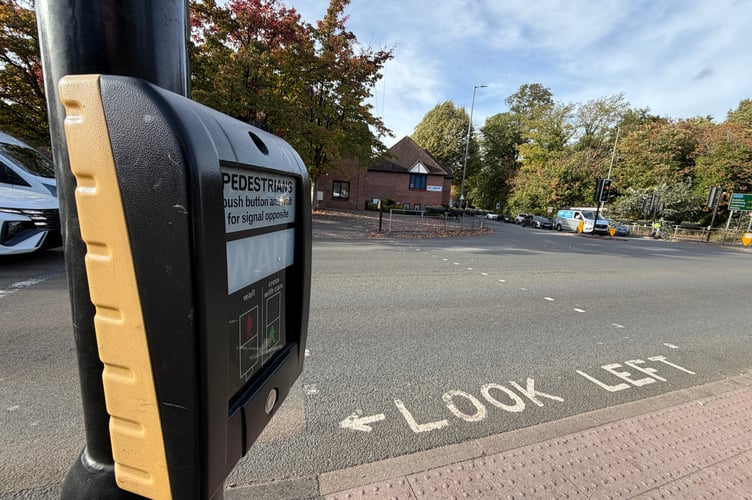
Unless I am mistaken, there already is a pedestrian crossing at Hickley’s Corner. Thousands of people use it safely every week. One simply has to press a button and cross when it is safe to do so.
At no time in the reporting of the accidents there have we been told how they actually occurred. Could it be that the pedestrians involved were trying to cross against a red light, or were not looking and distracted by a phone or wearing headphones?
More information must be available and would help us understand the situation.
Either a footbridge (a blot on the landscape) or an underpass (hugely expensive) would, in my opinion, be sledgehammer-to-crack-a-nut solutions.
While it is terribly sad that young people have died or been injured here, it is important to put the situation in context.
Robin Welland-Jones,
Pax Hill, Bentley
Heathland restoration is not ecocide
The word “ecocide” was used in the headline for your story about the Green Farm project between Beacon Hill and Churt (Haslemere Herald, October 22). This could hardly be further from the truth.
The article explains that conifer plantations are being felled to restore heathland. The trees are not native to the UK, and planting them as a monoculture produces one of the most ecologically impoverished habitats, with very low wildlife diversity.
The term “ecocide” would be better used to describe the original destruction of semi-natural heathland and/or woodland to establish the conifer plantation.
Appreciation of habitats and landscapes is subjective, but even people who enjoy conifer plantations must be aware that they are grown as a commercial crop and clear-felled periodically anyway.
There is every prospect that the work will result in an environment that can be enjoyed by recreational users and support the diversity of heathland wildlife for which our area is of national importance.
It seems the emotive word “ecocide” was taken from a social media post. All sorts of views are expressed online, but it is misleading to pick the most extreme and irrational for a headline.
Dr Andy Swan, Chair,
Haslemere Natural History Society
Honour our war dead by respecting our country
Many people in this country, particularly the older generations, still have direct or second-hand knowledge of the Second World War.
But the dark days of the war are passing from personal memory into history. Within a decade or so, few first-hand witnesses will still be alive.
Please let the younger generations learn of, and not forget, the sacrifices those wartime generations made.
They lost fathers, mothers, brothers, sisters and friends in brutal combat and terrifying air raids, when thousands of bombs were dropped on our towns and cities, night after night after night, month after month after month.
Many of them, along with their parents and grandparents, also suffered the atrocities of battle and personal loss during the First World War.
Everyone in this country, and throughout the free world, owes those generations a huge debt of gratitude. We owe our freedom to them. Let us not squander that precious gift.
We should all know what freedom means. Consider living under a system where you, your family, friends and everyone else were subject to state control – for example, being imprisoned for holding an opinion that disagreed with the state. A totalitarian state.
It strikes me whenever I am litter-picking along the streets or in car parks in Petersfield, around the junction of the A3 and A272, or passing some litter-infested stretch of road, that those who throw rubbish on our streets and roadsides cannot know of the sacrifices our wartime generations made.
Were they ever told, either by their parents or their school? Was this part of our history ever made special to them?
Sometimes it seems we are asleep at the wheel by not passing on knowledge of the sacrifices our near ancestors made for us.
We should teach children, and people generally, that our freedom did not happen by chance. It was fought for and paid for with the blood of our immediate ancestors.
We could start by instilling in young people a sense of respect for our surroundings, our country - the country for which the wartime generations made such huge sacrifices.
I urge everyone to call out littering and fly-tipping wherever you see it. Condemn it, bring it to the attention of our politicians, litter-pick and kick up a fuss.
Let us respect our war dead and their ultimate sacrifice by at least keeping our streets and countryside clean.
Glenn McLernon,
Petersfield
Comments
We've recently changed our login process. If you have an account for commenting, you will need to re-register on the login window.
This article has no comments yet. Be the first to leave a comment.