
A GOVERNMENT inspector has been accused of opening the floodgates to development in Farnham after granting permission for 43 new homes in a narrow leafy lane in The Bourne against the wishes of hundreds of residents, councillors and Waverley Borough Council’s planning chief.
Jonathon Parsons, an appeal inspector appointed by the Secretary of State for Communities and Local Government, last week overturned Waverley’s refusal of planning permission for Focus Homes’ proposed development at Baker Oates Stables in Gardener’s Hill Road.
His decision flies in the face of the 184 people who objected to the application, councillors who expressed grave concerns about its “life-threatening” access and pedestrian walkways in Gardener’s Hill Road, and Waverley’s head of planning, Matthew Evans who dismissed the plans last January before they even reached the committee stage.
Further demonstrating the strength of public feeling against the development - 484 people objected to a near-identical second application submitted by Focus Homes after Waverley’s initial refusal, before it was also thrown out by the council’s joint planning committee in June.


However, Focus Homes appealed against Waverley’s first decision and following an informal public hearing in October, the inspector controversially overturned the council’s ruling, concluding: “The limited adverse effects of granting planning permission would not be sufficient to significantly and demonstrably outweigh the scheme’s substantial benefits.”
Residents this week blasted the inspector’s decision as “flawed”, objecting specifically to Mr Parson’s “false” claim that 97 per cent of a new 220-metre pedestrian walkway opposite the development site in Gardener’s Hill Road would be off-road, protected by the highway verge.
Richard Walker, a resident of Birch Close who has co-ordinated the campaign against the development, said: “The appellant sent an ‘extraordinary letter’ to the inspector on the eve of the informal hearing in October, claiming 97 per cent of the pedestrian walkway would be on the council-owned verge and covered with Tarmac.
“This is simply not true and the appellant acknowledge it was closer to 60 per cent at the hearing, with the remaining 40 per cent of the walkway instead ‘painted’ directly on the road - a point the inspector fully acknowledged in October.
“Imagine our surprise then when his decision refers to the 97 per cent figure as true. I find it absolutely incredible - almost Orwellian - that the inspector can overlook such a key point in making his decision.”
Councillors also criticised the inspector’s decision this week, blaming the outcome on Waverley’s lack of an up-to-date Local Plan and five-year housing land supply which allowed Mr Parsons to base his decision on national planning policies rather than Waverley’s own policy, which is not expected to be updated until mid to late 2016.
This point was emphasised at last week’s meeting of Waverley’s executive committee, when it was revealed that the council lost almost half (44 per cent) of all planning appeals in the last quarter (July to September 2015), and all four in the western planning area which covers Farnham.
With numerous large planning applications waiting in the wings in Farnham - most notably 157 homes in Waverley Lane, 140 homes in Lower Weybourne Lane and 198 homes in Hale Road - it is speculated that Waverley’s poor performance at appeal seriously undermines its ability to control planning in Farnham, as warned by councillors when the council’s last attempt at a Local Plan failed in 2013.
Andy MacLeod, independent borough councillor for Farnham Moor Park, said: “This application perfectly demonstrates the problem Waverley faces with not having an up-to-date Local Plan in place.
“The site at Baker Oates has not been identified as a favourable site for development in either Waverley’s emerging Local Plan nor Farnham Town Council’s Neighbourhood Plan and had Waverley adopted its new Local Plan in time, it is highly unlikely the inspector would have overturned Waverley’s decision.
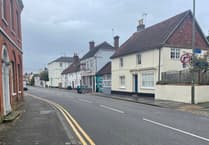
“Gardener’s Hill Road is very narrow, the development access is on a bend and a slope, you cannot see cars coming and the proposal to paint a section of the pavement on the road is a crazy idea.
“The whole community fought this and it was unanimously refused at committee. I cannot believe that given the public sentiment, the inspector has allowed the appeal. It sets a very dangerous precedent and leaves Farnham totally vulnerable.”
Kika Mirylees, a member of Waverley’s opposition Farnham Residents group and a neighbour of Gardener’s Hill Road, added: “It is absolutely insane if they think they can paint a line along the edge of the road and that it will save anyone. Even on the site visit councillors were having to jump in and out of the hedgerow to avoid oncoming cars.
“Because Waverley has failed to adopt a new Local Plan, it has given the green light for developers to leap over the democratic process. This is not democracy - it’s just as bad as any Arab state and why bother electing people if we’re just going to be ram-raided in this way?
“The gaps between villages in this area are being eroded and we are seeing creeping suburbanisation - there is another application for 46 homes in Frensham Vale less than half a mile from this site, and Badshot Lea is being targeted badly - all without any consideration or planning for the additional traffic and infrastructure.”
Carole Cockburn, borough councillor for The Bourne and lead member of Farnham’s Neighbourhood Plan working group, added: “I am very disappointed. The inspector quoted the lack of a five-year supply of housing land several times in his decision. Until Waverley Borough Council identifies this, it will be vulnerable at appeal.”
Waverley’s head of planning Matthew Evans admitted the number of appeals allowed in quarter two (44 per cent) was well above the council’s 30 per cent target, but defended the council’s record in “major” planning appeals - with just seven per cent of appeals for developments of 10-plus homes allowed in this time, well below the council’s 20 per cent threshold.
“Although the council has lost the Gardener’s Hill Road appeal, it is worth highlighting that the applicants did address a number of the concerns raised during the hearing and these have been secured with a legal agreement which was submitted during the hearing,” he added.
Comments
This article has no comments yet. Be the first to leave a comment.